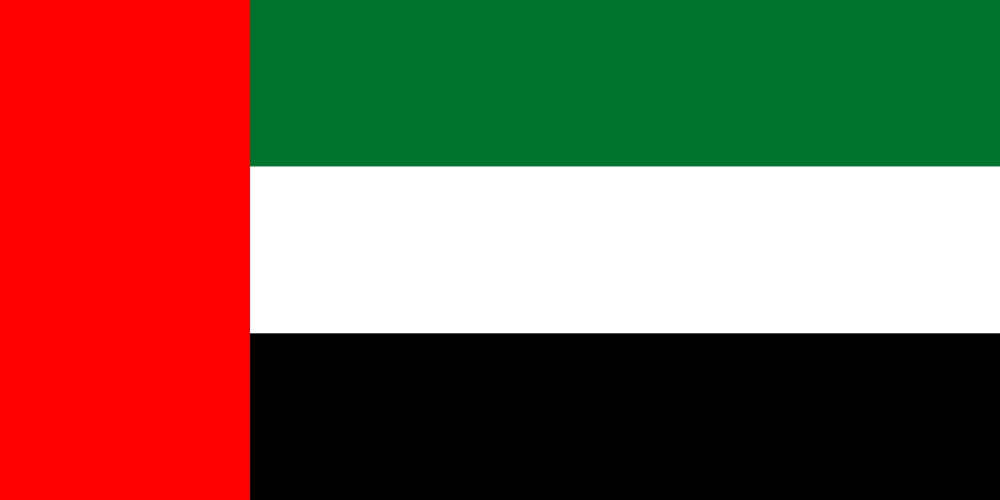
United Arab Emirates🕣
State in the northeastern part of the Arabian Peninsula on the Persian Gulf, in southwest Asia. Official name – the United Arab Emirates. Population – 10.1 million (as of 2020). Capital – Abu Dhabi. Official language – Arabic. Type of state structure – federal state consisting of 7 emirates (absolute monarchies) with special powers delegated to the federation. Main religion – Islam.
United Arab Emirates
Greeting
The Emirates is a multi-ethnic country, so you can see different forms of greeting. However, in a business environment, the traditional form of greeting is the handshake, which is usually exchanged by men.
Body contact between the sexes is not accepted due to Muslim traditions, which are strong in this state. Foreign women should wait for a man to take the initiative before extending their hand for a greeting.
Sometimes, as a sign of greeting a woman, a man puts his hand on his chest in the area of the heart and tilts his head slightly while smiling at the woman. This is an alternative (non-contact) form of greeting a woman in a business and social environment.
In this Arab country, it is customary to greet elders in age and position first. Handshake, especially at the initial contact, should not be strong and vigorous, but at the same time long-lasting enough and without shaking.
The whole greeting procedure among locals seems to be generally quite formal and rather lengthy. In addition to shaking hands, speakers may put their hands around each other's elbow or shoulder, kiss each other on the cheek (a light touch of cheek to cheek), and even touch each other with the tip of their noses ("the so-called nose greeting"). The latter is only possible between close friends.
During greetings, as well as during any business conversation, it is important to maintain eye contact with your interlocutor. This applies only to communication between men. If a woman is involved in the conversation, the man should not meet her gaze, stare at her, or compliment her on her appearance or clothing.
Foreigners should not copy the manners of their UAE counterparts and replicate traditional Arab greetings. Close business and even friendly relations should be established first.
Introduction
In official, formal, and business situations, especially at the beginning, the accepted form of address is Mr followed by the first name (not the surname) of the person, e.g. Mr Ahmed. The same applies to a woman: Mrs Haya.
Any titles, ranks and degrees are important in the Emirates. When meeting a high-level government official, use Your Excellency. If for some reason you are to meet a sheikh who has a formal title or rank, you should use it when addressing him. This is especially important in written communication.
If your partner's title or academic degree is unknown to you (or simply does not exist), use polite forms of address, namely Mr, Ms, Mrs, Miss, followed by the person's name.
If your partner has a doctor’s degree, you should use it when addressing him/her.
In Arabic surnames, it is not uncommon to find the words ibn and bint, such as Mohammed Khalfan Bin Kharbash or Maitha bint Mohammed bin Rashid Al Maktoum. Bin means "son of someone" followed by the father's name, bint means "daughter of someone" followed by the father's name. Another generation in the family, namely the father of the father, can also be indicated with these words. However, the current trend is to give only the father's name (and not the father and grandfather). The surname of the person is given at the very end.
After marriage, the woman keeps her surname and the children receive their father's surname.
Exchange of Business Cards
In UAE business practice, people usually exchange business cards during introductions at the beginning of the first meeting after the greeting.
The text of the business card, at least on one of its sides, should be in Arabic. This side should be the face side when you hand it to your partner.
If you know in advance that your partners speak English, there is no need for Arabic text on the business card.
There is no special ritual when handing over a business card in Emirates business practice. Mind this: business cards, like any other papers or documents, should be handed over (and received) with the right hand, not the left.
Small Talk: Overview
A business meeting starts with small talk which is very important for Arab businesspeople because they want to get to know their potential partner better, as relationship building is at the heart of any business. These conversations build a sense of trust between partners – a very important category in the Arab world.
Never rush through small talk in an attempt to move on to business matters, as your project may end before it begins. Show sincere interest in your partner, his interests, and preferences, for example, in sports or travelling. Be friendly and interested.
During communication, especially in the company of older people, it is important to be polite and even courteous. Arabs usually treat guests with special respect and expect the same treatment when they are visiting their partners.
During conversation, try not to ask questions that require a "yes" or (especially) "no" answer, especially if your question could be interpreted as a request. Your Arab partner will probably express agreement to do what he is asked to do, but what he would rather not do. Instead of a direct refusal, he will politely but evasively agree. It is important to pick up on some nonverbal signs of his true intention. How consent is expressed - warm and emotional or detached and cautious - can be a clue.
Preferred Topics
Positive impressions or complimentary remarks about emirates (Dubai, Abu Dhabi, and others), as well as landmarks, buildings, and structures.
Positive statements about the UAE's achievements, compliments to the government of the country, and international recognition of the Emirates will be well received by the Arab interlocutor.
Sports, especially local football teams.
As the relationship with their partner develops and deepens, many Arabs also start to discuss family matters during their conversations, for example, they may talk about their children. They will be pleased if the foreign partner does not forget the children's names and will mention them on occasion.
Taboo Topics
Controversial topics, especially political statements, should be avoided in small talk.
Religion and anything related to Islam is a sensitive topic and should be avoided.
Don’t ask personal questions during the first meeting, such as about your Arab partner's family or children.
Under no circumstances should you ask your Emirati colleague questions about his wife, even, for example, whether she works or what her profession is.
Emiratis can be annoyed by talking about the weather, especially if foreigners complain about the heat.
Refrain from criticizing the local culture, even if your interlocutor does so.
Personal Space
In this Arab culture, the distance of comfortable conversation varies depending on the gender of the participants. Men stand quite close to each other during a conversation, but this distance increases significantly when a woman joins the meeting.
UAE residents actively use body language during communication. Physical touches, including long handshakes, putting their arms around the elbow or shoulder are very common gestures. This also applies only to men, who should not touch women under any circumstances.
The distance of comfortable communication in the Emirates is shorter than, for example, in Central and Northern European countries. It is important not to try to increase this distance by, for example, taking a step back, as this will be perceived negatively.
Communication Specifics
This Arab state is characterised by an extraordinary cultural diversity. In business situations, it is possible to meet people with different cultural backgrounds, religious beliefs and educational levels. It is important to be careful with your speech and avoid any comments of an evaluative nature so as not to accidentally hurt somebody’s feelings.
Arab culture values emotional and expressive speech that is loud enough and complemented by rather active body language. On the contrary, a quiet and inexpressive manner of speaking is perceived as insincere. Often the way it is said is more important than what is said.
The exchange of compliments between Arabs is not surprising. They praise each other quite frequently and verbosely. A foreign businessman, if praise is directed towards him, should respond appropriately, i.e. make a series of complimentary remarks to his partner, as this is what will be expected of him. It is important to remember that Arab women should never be mentioned in these remarks.
In communication, Emirati men may often say what they think they are expected to say or want to hear instead of expressing their opinions directly and openly. This is because Arab families have lived in the same communities for decades (and even longer), where life and complex relationships require harmonious relations.
As family or personal relationships within the Arab community often overlapped with business relationships, this indirect way of communicating with each other became the norm.
That said, such hidden meanings are well understood in Arab society. However, foreigners will have to take time to understand them and learn to respond to them appropriately. Therefore, during communication, carefully and unobtrusively clarify what your partner has said.
If during a particular event you sit at a low table or on the floor, pay attention to the position you have taken. Your partner should not see the soles of your shoes, this is considered a very rude gesture, even an offence, as feet are considered a dirty part of the body.
A gesture such as a wink is seen as playful and flirtatious in the Emirates. Even the most innocent of winks should be avoided, as it can make the whole situation awkward.
Any questions? Contact us.
Ask a Question