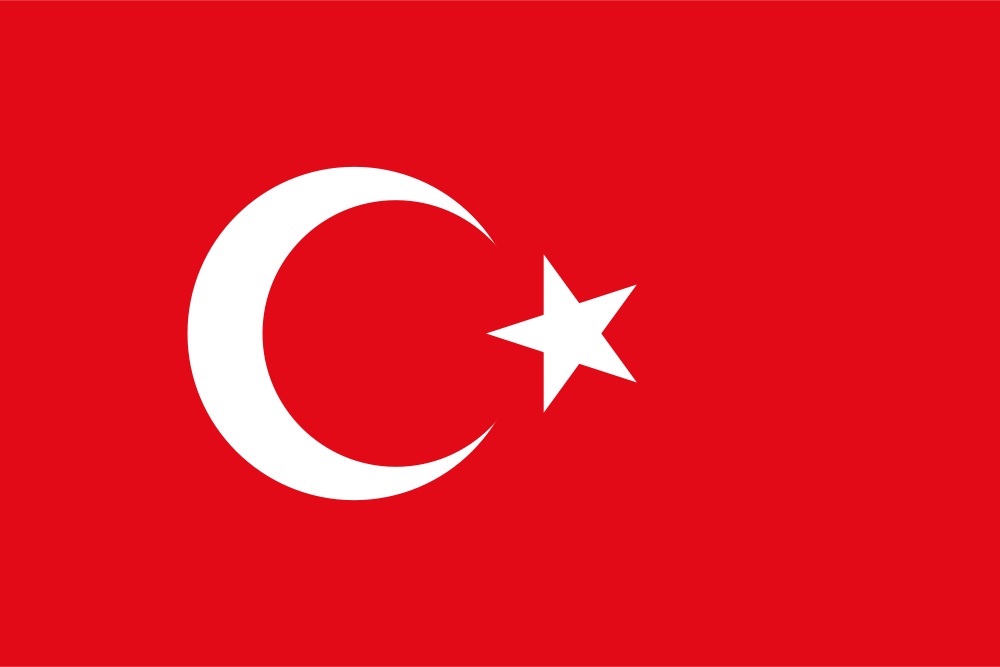
Türkiye🕣
Country in Western Asia (97%) and Southern Europe (3%). Official name – the Republic of Türkiye. Population – 85.9 million (as of 2020). Capital – Ankara. Official language – Turkish. Government type - unitary presidential republic. Main religion – Islam.
Türkiye
Greeting
When meeting, business partners exchange a firm handshake. If there are older individuals among the Turkish colleagues, greetings should begin with them.
In Türkiye, older people are treated with great respect: they should be the first to be introduced to others, greeted, served, or invited into a room. Even today, it is common in Turkey to see a young person bow their head and kiss the right hand of an elderly person (and in some regions, then touch it to their forehead).
Foreigners who come to Turkey for business purposes should behave accordingly — with particular respect — if there are older individuals among the hosts.
People who know each other well greet one another with hugs and kisses on both cheeks. Greetings between relatives and friends are especially warm and emotional. In business situations, when partners meet, this happens rarely.
Muslim traditions are very strong in Türkiye, and according to them, physical contact between genders is not customary. Foreign women should wait for the man to take the initiative before offering a handshake. The same applies to foreign men, who should pay attention to the woman's behavior in such situations.
• It’s a good idea to learn at least a few greeting phrases in Turkish, such as: Hello! Hi! – Merhaba, meraba/selam; Good morning! – Günaydın.
• Interestingly, Turkish has two different expressions for saying goodbye. The person staying says Güle güle, while the person leaving says Görüşürüz.
Introduction
Traditionally, every person in Türkiye is given three names. The first is assigned in honor of a relative and is used only in formal legal documents. The second is the given name, and the third is the surname, which is inherited from the father. Most surnames commonly used in Turkey today appeared after the 1934 reforms related to the establishment of the Republic of Turkey.
In both business and everyday life, Turks generally use their given name and surname (i.e., the second and third names), for example, Nilay Özdemir or Burak Özçivit. When addressing someone politely, the forms Bey (Mr.) and Hanım (Ms./Mrs.) are commonly used.
The differences from English are quite interesting in this context. For instance, if your business partner’s name is Serkan Yıldırım and you are speaking to him in English, you would address him as Mr. Yıldırım. But you may be surprised to hear his colleagues call him Serkan Bey in Turkish. The same applies to women’s names: Neslihan Atagül would be addressed as Ms. Atagül in English, and Neslihan Hanım in Turkish.
Addressing each other by first name is acceptable, for example, between colleagues who hold comparable positions and are close in age. In business settings, however, it's better to use polite forms in English – Mr., Mrs., or Ms.
Academic titles and degrees, as well as professional qualifications, carry significant weight in Turkish society, though they are rarely used in business interactions.
Turkish women typically take their husband’s surname after marriage. However, some choose to keep their maiden name and add it to their husband’s surname. For instance, if Birgül Karabacak marries Mehmet Demirel, she may go by Birgül Demirel or Birgül Demirel Karabacak. Sometimes, if a woman is well-known in her company, she might indicate her maiden name in parentheses, such as Birgül Demirel (Karabacak) or Birgül (Karabacak) Demirel. At the same time, the correct way to address her is Mrs. Demirel.
Exchange of Business Cards
In Turkish business practice, business cards are often exchanged at the end of a meeting rather than at the beginning, so that all participants have the option to contact the partner at any time afterward.
A business card should include all necessary information about its owner, such as full name, company name, job title, and up-to-date contact details.
Ideally, the text on at least one side of the business card should be in Turkish. This Turkish side should be facing up when handing the card to a partner.
There is no special ritual for exchanging business cards in the Turkish business environment. However, it is important to remember that business cards, like any other papers or documents, should be handed over with the right hand or with both hands, not the left hand. The same applies when receiving them. This practice is based on traditional Muslim customs in Turkish society.
If your meeting with a Turkish colleague is scheduled at their office, you should hand your business card to the receptionist or secretary upon arrival so they can inform their manager of your presence.
Small Talk: Overview
In Turkish business culture, small talk is highly valued and serves as a kind of prelude to the actual negotiations. Turkish businesspeople consider it important to get to know their potential partners better, as building relationships is the foundation of doing business. Such conversations help establish a sense of trust between partners—a key concept in Türkiye.
Never rush through small talk in an attempt to move quickly to business matters, as doing so could jeopardize your project before it even starts. Show genuine interest in your partner—their hobbies, preferences, for example, in sports or travel. Be natural, friendly, and sincerely engaged.
During conversations, especially in the presence of older individuals, it’s important to be as polite as possible. Turks are known for their hospitality and treat guests with great respect—they expect the same in return when they are the guests.
Preferred Topics
Sports, especially football. Many men in Turkey are passionate about football and will gladly engage in a conversation on the topic, sharing their impressions of the latest national or international championship.
Family and family members. If you have photos of your family with you, consider showing them to your Turkish partner. This can be the starting point for building a more trusting relationship.
Turkish culture, geography, and history. Turks love to talk about their country and will appreciate your interest in it. They may even ask you to share your impressions of Turkey, certain places you’ve visited, or cultural landmarks.
Your Turkish colleague will appreciate positive remarks about the country’s rich history and culture. Turks take pride in their heritage and past accomplishments.
Before a business trip to Turkey, it’s a good idea to familiarize yourself a bit with the geography of its regions and their history. Your knowledge will make a strong impression on your Turkish colleagues.
Taboo Topics
Family is generally a popular topic, but don’t speak about the female members of the family—wives, mothers, sisters, and daughters.
Religion and anything related to Islam is a rather sensitive topic that should be avoided in conversation. Even if the topic comes up, try to steer the discussion in another direction, citing, for example, a lack of knowledge on the subject.
Political and ethnic topics can be quite painful, particularly the Cyprus issue, the situation of the Kurds in Turkey, and Turkey’s relations with Greece and Armenia.
Any negative remarks about Turkey, its politics, or its history are likely to be perceived as offensive.
Do not refer to Turks as Arabs or their language as Arabic. These are two different cultures and completely different languages. Such a comparison will be poorly received by Turkish colleagues.
Do not make critical remarks about the founding father of the Turkish Republic, Mustafa Kemal Atatürk. He is still highly respected by many people in the country.
Personal Space
In Turkish culture, people tend to stand closer when they talk compared to what you might be used to in Central or Northern Europe, or the U.S. It’s often closer than arm’s length. That might feel a bit too close at first, but it’s normal there and not meant to be rude or aggressive.
If someone feels like they’re standing a bit too close for your comfort, try not to take a step back — this may be perceived negatively.
Turks use a lot of body language when they talk. You’ll see lots of gestures, facial expressions, head movements, and eye contact — it’s a big part of how they communicate.
Physical touch is common — like pats on the arm, shoulder, or back, and even hugs or cheek kisses. But this is usually just between men. Men can’t touch women in most situations.
When you’re talking with someone, try to keep eye contact. It shows you’re listening and genuinely interested in what they’re saying.
Communication Specifics
When talking, Turks can sometimes come across as rather expressive – they might speak loudly or passionately defend their point of view. But that doesn’t mean they’re in a bad mood or upset. It’s just normal in Turkish culture to show emotion and speak with feeling, especially when talking about something important to them.
Turks don’t always go for direct or super clear statements. In fact, what they say often has a layer of meaning underneath. This can depend on things like how well the people know each other or how much they rely on one another. What’s left unsaid, body language, facial expressions, tone of voice, and even certain words that only make sense within the culture – all of that plays a big role.
Relationships really matter in Turkish society, and keeping them strong means being tactful. People tend to avoid blunt opinions or saying things too directly. This is especially true if you need to say something critical – it’s important to be extra careful and polite.
Turks are pretty good at picking up on hidden meanings and unspoken messages. For outsiders, it takes time to learn how to understand all that and respond in the right way. So when you’re talking with someone, it’s a good idea to gently ask for clarification if you’re not sure what they meant.
Any questions? Contact us.
Ask a Question