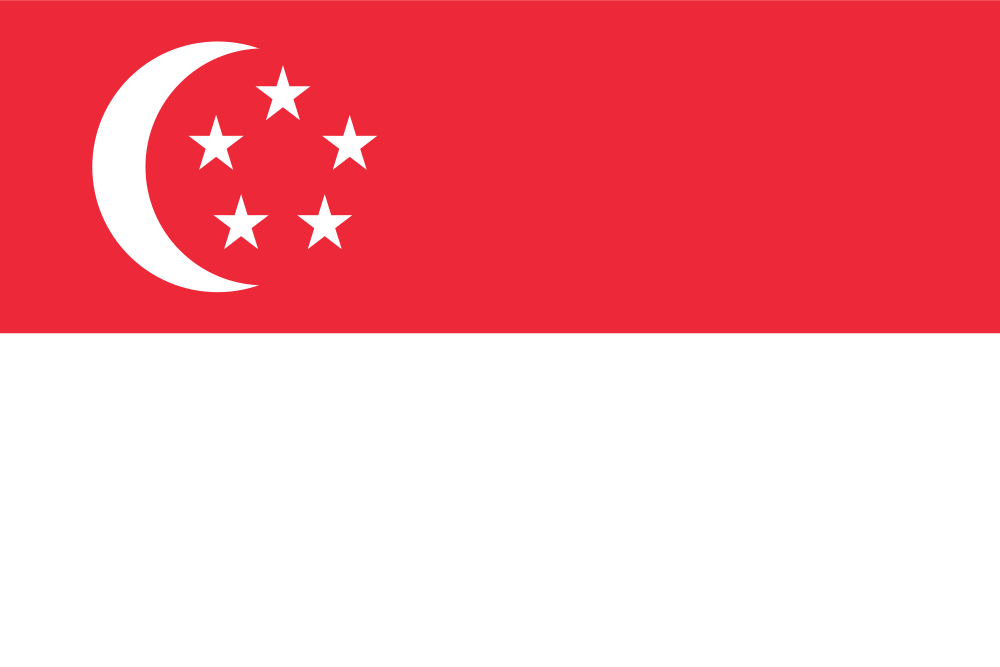
Singapore🕣
Country in Southeast Asia. Official name – the Republic of Singapore. Population – 5.9 million (as of 2020). Capital – Singapore. Official languages - Chinese, Malay, Tamil, and English. Government type – parliamentary republic. Main religion – Buddhism.
Singapore
Greeting
Singapore is a multiethnic and multicultural country, so greeting customs may vary depending on the ethnicity of the person you are interacting with—whether they are Chinese, Malay, or Indian.
Singaporeans of Chinese descent traditionally greet each other with a handshake accompanied by a slight bow, or simply with a bow. Men usually shake hands when greeting and saying goodbye. Women typically take the initiative by extending their hand for a handshake.
Handshakes among Singaporean Chinese are light and gentle, and can be quite prolonged. During greetings, many Chinese in Singapore avoid direct eye contact, which is seen as a sign of respect toward the other person.
Among Singaporean Malays, most of whom are Muslim, the customary greeting is the salam. In this gesture, both parties extend their joined hands and lightly touch each other’s hands. Then they withdraw their hands and place them on their chest over the heart. Using both hands shows respect to someone older or of higher status. Among equals, the salam is performed with the right hand only.
When meeting foreigners, Singaporeans of Malay descent typically greet them with a handshake. However, keep in mind that physical contact between men and women is not customary among Muslims. Therefore, businesswomen should be aware that male partners may not initiate a handshake, as it is not accepted in their culture.
The same applies to foreign men greeting women during business meetings. A woman may prefer simply nodding her head (a kind of slight bow) instead of extending her hand. In such cases, a man may place his hand over his heart as a respectful gesture. When businesswomen meet each other, they generally exchange handshakes.
The traditional greeting among Singaporean Indians is “Namaste,” used by both men and women. This involves placing the palms together in a prayer-like gesture at chest level and giving a slight bow. This greeting serves as an alternative to a handshake, which is also commonly used, especially among younger people.
When greeting a group of colleagues, you should begin with the person of the highest rank or oldest age. Status—reflected primarily in one’s position, role, or age — is a very important category in Singapore’s business culture.
Introduction
In formal communication, people in Singapore address one another using professional titles, academic degrees, or qualifications. When addressing a Singaporean of Chinese descent, you should first state their title (if any), followed by their surname. When dealing with Singaporeans of Malay or Indian descent, you should also start with their title, but use their first name afterward.
If you do not know your partner's academic or professional titles, or if they do not have any, use the standard polite forms of address: Mr., Mrs., Ms., or Miss, followed by the surname (for Chinese partners) or first name (for Malay and Indian partners).
The structure of names varies depending on the person’s ethnic background. For example, Chinese names typically have the surname first, followed by one or two given names, such as Wang Chi Beng. Many Singaporean Chinese adopt a Western name for international use, e.g., William Chi Beng.
For instance, if your Singaporean partner of Chinese descent is named Li Zifu Ping and holds the position of General Manager, you should address him as: General Manager Li. If he is introduced to you in this manner, you should follow by stating your position and surname, not your first name.
After marriage, Singaporean women of Chinese descent usually retain their maiden name. However, children take their father's surname.
Singaporeans of Malay descent typically do not have family surnames. Instead, a person’s given name is followed by their father’s name. For example: Suleiman Rashid, or in full form: Suleiman bin Rashid (“Suleiman, son of Rashid”). For women, bin is replaced with binti: Naimah Talib or fully Naimah binti Talib (“Naimah, daughter of Talib”). In a formal address, you would say Mr. Suleiman (not Mr. Rashid) and Mrs. Naimah (not Mrs. Talib).
After marriage, Malay women in Singapore also typically keep their maiden names, like Chinese women. However, some—especially professional or businesswomen—may choose to add their husband’s name to their father's name.
Most Singaporeans of Indian descent do not have fixed surnames either, and naming customs vary by the region of origin. For example, families from northern India often give children a bigger family (close to clan) name at birth, which serves as a surname.
Exchange of Business Cards
The text on your business card can be in English. However, if you plan to stay in Singapore for a longer time or know in advance that your business partner is of Chinese descent, it's a good idea to prepare business cards with Chinese text on one side.
In addition to your name, surname, and contact information, your card should include your job title, professional qualifications, academic degrees, and any other honors or distinctions. These details will certainly be appreciated by your Singaporean colleagues.
When presenting your card (and when receiving one), hold it with both hands. Upon receiving a card, take a moment to look at it carefully while still holding it with both hands, then place it in front of you on the table or into a business card holder.
Never write notes on a business card received from a Singaporean colleague.
For a business trip to Singapore, it's advisable to bring a large number of business cards, as you’ll likely exchange them at all kinds of business and social events.
Small Talk: Overview
Building and maintaining relationships is of great importance in Singapore's business culture, especially in interactions with foreign partners. Therefore, special attention should be given to small talk with your Singaporean counterparts.
Topics for small talk are usually quite general, and it is best to maintain a neutral and polite tone, favoring vague or non-direct statements over strong opinions or assertiveness.
An important part of communication in Singaporean culture is silence. These silent pauses are a sign that people are listening carefully and respecting the speaker by thoughtfully considering what was just said. Don’t show impatience if a pause seems too long.
Silence is not viewed negatively in Singapore, whether in business or social settings. Someone who talks too much or too energetically may be seen as immature or inexperienced. You’re not expected to respond to every statement made by your conversation partner—something that might be challenging for people from more expressive cultures.
Indirect communication is the norm in this culture. Singaporeans tend to speak in a roundabout way, avoiding blunt or especially harsh expressions. They often avoid saying “no” directly. Instead, they might say something like, “I’ll need to think about it” or “This matter needs further consideration.”
Emotional expression, particularly of negative emotions, is discouraged during conversations. Showing anger or frustration will likely make your Singaporean counterpart feel uncomfortable and can hinder your efforts to build a successful relationship.
Preferred Topics
Tourism, travel, and interesting places you have visited.
Impressions (positive) about the country, the prosperity of Singapore.
National cuisine.
Plans for the future.
Successes of the company you represent.
Taboo Topics
Avoid discussing political topics, especially the activities of the country's first Prime Minister, Lee Kuan Yew, one of the architects of Singapore's economic miracle.
Bureaucracy in Singapore, as well as various established rules, introduced taxes and duties.
Political and economic relations between Singapore and neighboring countries, particularly Malaysia and Indonesia.
Contradictory relations between the ethnic groups living in Singapore.
Personal Space
During a conversation, interlocutors (both men and women) typically stand at arm’s length from each other.
In general, physical contact and any kind of touching, except for a handshake, are not encouraged.
In conversation, Singaporeans tend to avoid excessive gesturing and speaking too loudly.
During a conversation, it is important to maintain eye contact with your partner. This shows that you are actively listening. However, some Singaporeans (especially those of Malay or Indian origin) may avoid direct or prolonged eye contact, especially with someone older or of higher status.
Communication Specifics
Communication in Singaporean society can be described as high-context. This means that a certain amount of information remains unspoken or implicit, as it is either derived from the situation itself or understood without words by all participants due to shared cultural context.
At times, nonverbal cues carry significantly more meaning than the explicit, verbal part of speech. Facial expressions, tone of voice, gestures, and posture all play an important role in communication.
It is important to show respect to everyone present during a conversation, but especially to those who are older or hold a higher social status. You should not interrupt them or correct them, even if they make a mistake.
The concept of "face"—along with "losing face" and "saving face"—is very important. This refers to a person’s reputation, public image, or how they are perceived by others. A loss of face occurs when someone is criticized, contradicted, or humiliated in front of others.
For Singaporeans, regardless of ethnic background, preserving their face and helping others avoid losing face is a key element of communication. Especially when addressing negative or unpleasant topics, they tend to be very cautious, avoid directness, and speak around the issue rather than addressing it head-on.
When building business relationships with partners from this Asian country, it is essential to keep these communication traits in mind (especially the concept of face). In delicate situations, it is better to return to a topic under different pretenses and ask the same question from various angles rather than pressing the issue directly.
Any questions? Contact us.
Ask a Question