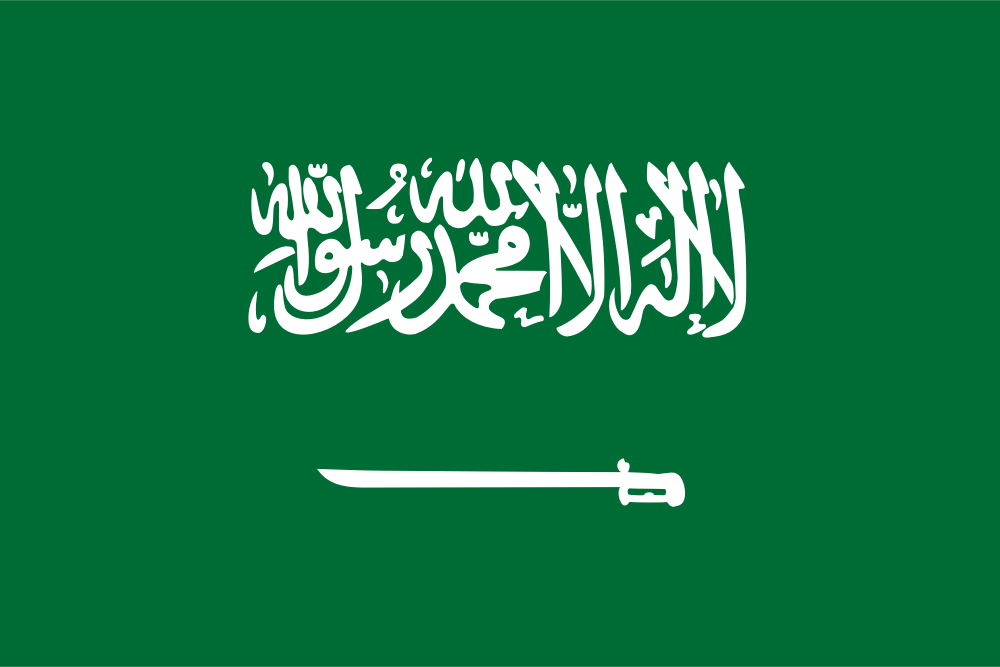
Saudi Arabia🕣
Country in Southwest Asia. Official name – the Kingdom of Saudi Arabia. Population – 35.8 million (as of 2020). Capital – Riyadh. Official language – Arabic. Government type – absolute monarchy. Main religion – Islam.
Saudi Arabia
Greeting
The traditional form of greeting in the business environment of this country is a handshake, usually exchanged between men. However, those who have worked with foreigners for a long time generally exchange handshakes with both women and men.
If a Saudi colleague refrains from shaking hands with a foreign woman, it should not be seen as rude or impolite behavior. On the contrary, it is a sign of respect toward the woman.
Physical contact between genders is not customary due to strong Muslim traditions in this country. Foreign women should wait for a man to take the initiative before offering a handshake. The same applies to foreign men, who should observe women’s behavior in such situations.
In case of uncertainty about the appropriate greeting behavior, a foreign man can nod slightly toward the woman, smile, and greet her in English or (preferably) Arabic.
The traditional greeting procedure in Saudi Arabia is different. Relatives, friends, or people who know each other well and for a long time may, in addition to shaking hands, place their left hand on the other person's right shoulder while exchanging cheek kisses (a light touch of cheek to cheek). Sometimes, they may even touch noses (“nose rub”), but this is only done between very close friends.
In this Arab country, there is a deep respect for the elderly. It is customary to greet older people first.
During greetings and any business conversation, it is important to maintain eye contact with your interlocutor. However, this applies only to communication between men. If a woman is present in the conversation, a man should avoid direct eye contact, staring at her, or making comments about her appearance or clothing.
Foreigners should not try to imitate the traditional Arab greeting styles used by their Saudi partners. Such gestures are only appropriate after establishing a close business or even personal relationship.
Introduction
In situations of official, formal, and business communication—especially during initial contacts—the accepted form of address is “Mr” or “Mrs” followed by the person's first name (not last name), for example, Mr Ali. The same applies to women: Mrs Maryam.
Titles, ranks, and academic degrees are important. When meeting a high-ranking government official, the correct form of address is Your Excellency. If you are meeting a sheikh who holds a formal title or rank, be sure to use it when addressing him. This is especially important in written communication.
If you are unaware of your counterpart’s title or academic degree (or if they do not have one), use polite forms of address such as Mr, Ms, Mrs, or Miss, followed by the person’s first name.
• If your counterpart holds a doctoral degree, it should be used when addressing them. In this case, a person named Abdullah Hussein Khan Al-Saud with a PhD or equivalent should be addressed as Dr Abdullah.
In Arabic surnames, it is common to encounter the words "bin" and "bint", such as in Ibrahim Khalfan Bin Kharbash or Fatemah bint Mohammed bin Rashid Al Maktoum. "Bin" means "son of," followed by the father’s name, and "bint" means "daughter of," also followed by the father’s name. These terms may sometimes include an additional generation, such as the grandfather (father of the father). However, the current trend is to mention only the father’s name, not both the father and grandfather. The family name appears at the end.
After marriage, a woman keeps her maiden name, and children take their father’s family name.
Exchange of Business Cards
It is customary to exchange business cards during introductions at the beginning of the first meeting, after the initial greeting.
A business card should include the standard set of information: first and last name, job title or position, company name, and all relevant contact details. The mobile phone number is especially important (although women are advised not to include their mobile number).
If you hold an academic degree or title, or have a qualification such as engineer or doctor, be sure to include it on your business card—and in a way that draws attention. Such credentials are highly respected in Saudi society.
It is preferable that the text of the business card, at least on one of its sides, be written in Arabic. This side should be considered the front when handing it to a partner.
However, if you already know that your partners speak English, then Arabic text on the business card is not necessary.
There is no specific ritual for exchanging business cards. However, it is important to remember that business cards—like any other papers or documents—should be handed over (and received) with the right hand, not the left.
Small Talk: Overview
Business conversations in Saudi Arabia are usually preceded by small talk, which serves as a kind of prelude to the actual negotiations. For Arab businessmen, it is important to get to know their potential partner better, as relationship-building is the foundation of any business. These conversations help establish a sense of trust between partners—a crucial value in the Arab world.
Don’t show impatience during this small talk, rushing into business matters too quickly—doing so could cause your project to end before it even begins. Show genuine interest in your partner, their hobbies, or preferences, such as sports or travel. Be natural, friendly, and engaged.
Before traveling to Saudi Arabia, prepare in advance by learning a few basic phrases in Arabic. These will be especially useful during greetings, as a handshake is traditionally accompanied by a verbal salutation. The common greeting is “As-salamu alaykum,” which means “Peace be upon you”. The appropriate response is “Wa alaykum as-salam”, meaning “And upon you be peace”.
When communicating—especially in the presence of older individuals—it is important to be as polite and respectful as possible. Arabs generally show great respect toward guests and expect the same level of courtesy when they themselves are visitors.
During conversations, try to avoid asking “yes-or-no” questions, especially when your question might be interpreted as a request. Your Arab partner may agree to something out of politeness, even if they do not wish to fulfill the request. Instead of giving a direct “no,” they might respond with a polite but vague “yes.” It’s important to pay attention to nonverbal cues to understand their true intentions. Whether the agreement is expressed warmly and enthusiastically or distantly and cautiously, these can be important hints.
If you are seated at a low table or on the floor during a meeting or social event, be mindful of your posture. Your partner should not see the sole of your shoe, as this is considered very rude and even offensive — feet are viewed as the dirtiest part of the body.
Preferred Topics
Sports, especially football (soccer) and basketball, are popular and safe topics for conversation.
Travel experiences — places the speakers have visited and their impressions.
Discussing landmarks and attractions in Saudi Arabia that the guest plans to visit. It shows interest and respect for the host country.
Conversations about traditions and business practices in the guest’s home culture are welcome.
As the relationship with a partner develops and deepens, many Arabs begin to talk about family matters during conversations—for example, they may mention their children. It will be appreciated if a foreign partner remembers and uses the children’s names in future conversations.
Taboo Topics
Under no circumstances should you ask a Saudi colleague about his wife, even seemingly harmless questions such as whether she works or what her profession is. However, family topics in general, including conversations about children, are usually well-received. Still, it’s best not to bring up family matters during the first meeting, at least not on your own initiative.
Avoid discussing local or regional politics, especially controversial events that may provoke mixed opinions.
One particular taboo topic is the relationship between the Arab world, and especially Saudi Arabia, and Israel. If you conduct business in Israel, it's best not to mention this in conversations with Saudi partners.
Religion, particularly anything related to Islam, is a highly sensitive topic that should be avoided in conversation. In Saudi society, faith is considered deeply personal, and interfering in or inquiring about it is seen as inappropriate.
Personal Space
In this Arab culture, personal space during conversation varies depending on the gender of those involved. Men tend to stand quite close to each other when talking, but this distance increases significantly when a woman is part of the conversation.
Body language during communication is important. Physical gestures such as prolonged handshakes or gently holding the other person’s arm near the elbow or shoulder are quite common. However, this applies only to men — under no circumstances should a man touch a woman.
The comfortable conversational distance in Saudi Arabia is generally smaller than what is typical in Central and Northern European countries. It's important not to try to increase this distance, for example by stepping back, as this may be perceived negatively or even as a sign of disinterest or disrespect.
Communication Specifics
In Saudi Arabian business culture, building and maintaining relationships is of great importance, especially when it comes to interactions with foreign partners. Focus on developing personal connections — this may include conversations unrelated to business, participation in social events together, attending forums, and more. These time investments are highly valued and will pay off in the long run.
Saudi Arabian speech tends to be indirect. Their communication often includes subtext, influenced by factors such as the relationship between the speakers, their social status, and the context of the conversation. Particular importance is given to what is left unsaid, to certain gestures and facial expressions, intonation, and to the nuanced meanings of words that may only be fully understood by native speakers of this culture.
It’s important to understand that Arabs may sometimes say what they believe is expected or polite to say, rather than directly expressing their true opinion. This is rooted in the fact that, for decades (and even longer), Arab families have lived within the same communities, where the daily preservation of harmonious relationships was a necessity.
Since in Arab communities family or personal relationships often overlap with business ones, this indirect and often highly nuanced style of communication has become characteristic of the business sphere as well.
These hidden meanings are well understood within Arab society. However, foreigners will need time to learn how to recognize and respond appropriately to them. Therefore, during communication, it is advisable to tactfully clarify what your partner has said.
In this Arab culture, as in many other Arab countries, emotional and expressive speech is highly valued. It is often accompanied by active gestures. In contrast, a quiet or flat manner of speaking may be perceived as insincere. Frequently, how something is said is considered more important than what is said.
Exchanging compliments between Arabs is quite common and not surprising. They often praise each other. If a foreign businessman receives a compliment, they are expected to respond appropriately —that is, by offering a few complimentary remarks in return to their partner. This is the expected norm. However, it is important to remember that Arab women must never be mentioned in such remarks.
Any questions? Contact us.
Ask a Question