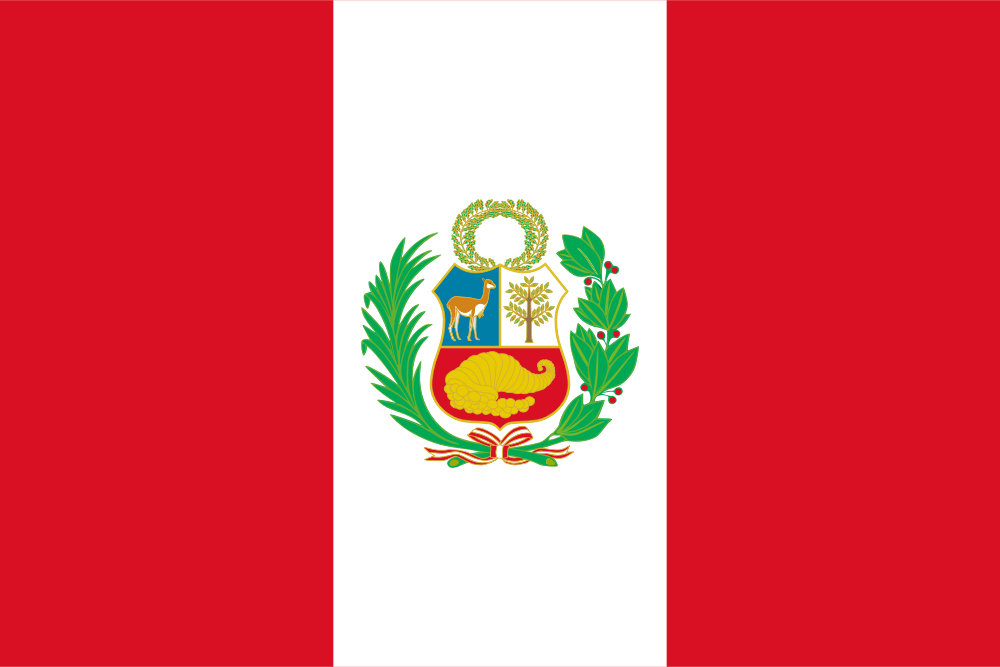
Peru🕣
Country in the western part of South America. Official name – the Republic of Peru. Population – 6.7 million (as of 2020). Capital – Lima. Official languages – Spanish and Quechua. Government type – presidential republic. Main religion – Catholicism.
Peru
Greeting
In Peru, a common way to greet someone in a business setting is with a handshake. Both men and women use this gesture in formal situations, and it’s also used when saying goodbye.
When meeting a group of people, it's important to greet each person individually. If people are sitting at a table or are in the room during a meeting, you should say hello or goodbye to each one personally, not just give a general greeting to the group.
Handshakes in Peru can vary. If your business partner is from a big city and has a European background, their handshake will likely be firm but friendly. People from rural areas often prefer a quick and gentle handshake.
Making eye contact is an important part of the greeting.
While first-time greetings tend to be fairly formal, later meetings are usually more relaxed and warm. Men might greet each other with a touch on the shoulder or a light hug. Women often greet with a cheek-to-cheek kiss on the right side (without actually touching the cheek). If there’s a kiss between a man and a woman, it’s usually the woman who initiates it.
Common phrases Peruvians use when greeting each other include: “Buenos días” (“Good morning”), “Buenas tardes” (“Good afternoon”), and “Buenas noches” (“Good evening”).
Introduction
During initial contact in official, formal, or even social situations, it’s best to use formal titles — Señor, Señora, or Señorita — followed by the person’s last name.
In formal or professional settings, if your counterpart has a professional title or position, it’s polite to use it when addressing them. Common titles include Doctor (Doctor), Abogado (Lawyer), Ingeniero (Engineer), and Profesor (Professor).
At the beginning of a business relationship, Peruvians usually address foreign partners by their last name rather than their first name, and they expect the same in return. If the person has a professional title or honorific, make sure to include it.
If you’re unsure of your counterpart’s title (or if they don’t have one), use a polite form of address: Señor (Mr.) for men, and Señora (Ms.) or Señorita (Miss) for women — always followed by the person’s last name.
Peruvian last names follow Spanish tradition. People usually have two surnames: the first is the father's paternal surname, and the second is the mother's paternal surname. For example: Arturo Beeche Santiago. In conversation, just the first surname is typically used—in this case, Señor Beeche.
When women marry, they often add their husband’s last name to their own, using “de”. For example, Maria Martinez Diaz, after marrying Arturo Beeche Santiago, becomes Maria Martinez Diaz de Beeche. She would be addressed as Señora Beeche.
When it comes to names and titles, it’s a good idea to follow your Peruvian colleagues’ lead. At the start of a business relationship, stick to the level of formality appropriate for the situation. Wait for your Peruvian counterpart to suggest switching to first names.
Exchange of Business Cards
In business settings in Peru, it’s common to exchange business cards during introductions at the first meeting, as well as at events like trade shows, fairs, conferences, or forums. So it’s important to have plenty of business cards with you.
Cards are usually exchanged right after the initial greeting.
Make sure your business card includes not only your job title but also any relevant professional or academic qualifications.
At least one side of the card should be printed in Spanish.
There’s no special ritual for handing over a business card in Peru, but when you receive someone else’s card, take a moment to look at it. A positive comment or compliment about the person or their company is always a nice touch.
Small Talk: Overview
Even if your Spanish isn’t very strong, try to speak a little of the language in casual, non-business settings. Your effort will be appreciated by your Peruvian counterparts.
Don’t be surprised if your potential Peruvian partner asks personal questions during small talk — like about your family or personal life. This helps them get a better sense of who you are as a potential business partner.
When talking with Peruvian colleagues, it’s important to show respect to older individuals present. Make sure to address them with extra politeness.
Be ready to accept invitations to social activities (like sports events, for example). These are often great opportunities to get to know each other better and build stronger relationships.
Pay attention to your appearance before meeting with a Peruvian colleague. It’s important to look presentable—your clothes, hairstyle, and makeup (for women) should suit the occasion and setting.
Preferred Topics
Peruvian cuisine – Show some interest in this topic. For many people in Peru, food and cooking are a source of national pride.
Sports, especially football (soccer).
Family and anything related to home or family life.
Peruvian history and culture – Including landmarks, nature, and famous places, are great conversation starters.
Positive impressions of Peru – Whether it's about specific regions, cities, or the country in general, sharing good experiences is always well received.
Asking for recommendations – Questions about what sights to see or which restaurants to try will be appreciated and usually spark enthusiastic responses.
International news – As long as it’s non-controversial, this can also be a suitable topic for discussion.
Taboo Topics
Avoid politically sensitive or controversial topics, such as the War of the Pacific, Peru’s relations with Chile or Ecuador, ethnic issues, or corruption. These are considered taboo subjects.
Be cautious when discussing Peru’s internal politics. Even if you're well-informed, direct or critical comments can be sensitive and may offend your counterpart.
When talking about the United States, avoid referring to the country simply as “America,” and don’t call its citizens “Americans,” as people from Central and South America also consider themselves American. It’s better to say “US Americans” or “People from the United States.”
Try not to overly praise neighboring countries, like Chile. These nations are sometimes viewed as competitors in areas such as trade, and these comments can be taken the wrong way.
Personal Space
Personal space in Peru is smaller than in many other cultures. People tend to stand quite close to each other during conversations. This is part of the warm, personal communication style common in Peruvian society.
If you stand too far away from someone during a conversation (which might be the norm in your culture), it can be seen as a sign of distance or lack of interest.
Body language and gestures play a big role in communication. Peruvians often gesture actively and may touch each other casually—like a pat on the shoulder or arm, a hug, or a light squeeze on the shoulder—as a way to show friendliness and warmth.
Maintaining steady eye contact is important during conversations, but it shouldn’t be too intense or prolonged. When speaking with women, it should be even more moderate and respectful.
Don’t copy Peruvian body language. Nonverbal communication can be subtle and is often best understood—and felt—by people who grew up in that culture.
Communication Specifics
Building trust and mutual understanding is a key part of communication in Peruvian society. This process can take time.
Directness and blunt honesty are generally avoided in Peru. People tend to express themselves in a careful, friendly way to prevent conflict or avoid causing someone to “lose face.”
It’s common to avoid saying a direct “No.” Instead, people might say, “I need to think about it,” or even remain silent, which is usually understood as a polite refusal or disagreement.
Showing respect and following protocol is important when speaking with people in positions of authority or responsibility. Be polite and formal when necessary.
At the beginning of a business relationship, a certain level of formality is expected. This includes using respectful forms of address and keeping your language neutral and courteous.
Peruvians tend to communicate in a warm and friendly way. You’ll make a good impression if you come across as genuine, interested, and engaged in the conversation.
Eloquence is valued in Peru. Your Peruvian colleagues may be quite talkative, using lots of body language and gestures. Conversations can be emotional and lively, with very few long pauses.
Any questions? Contact us.
Ask a Question