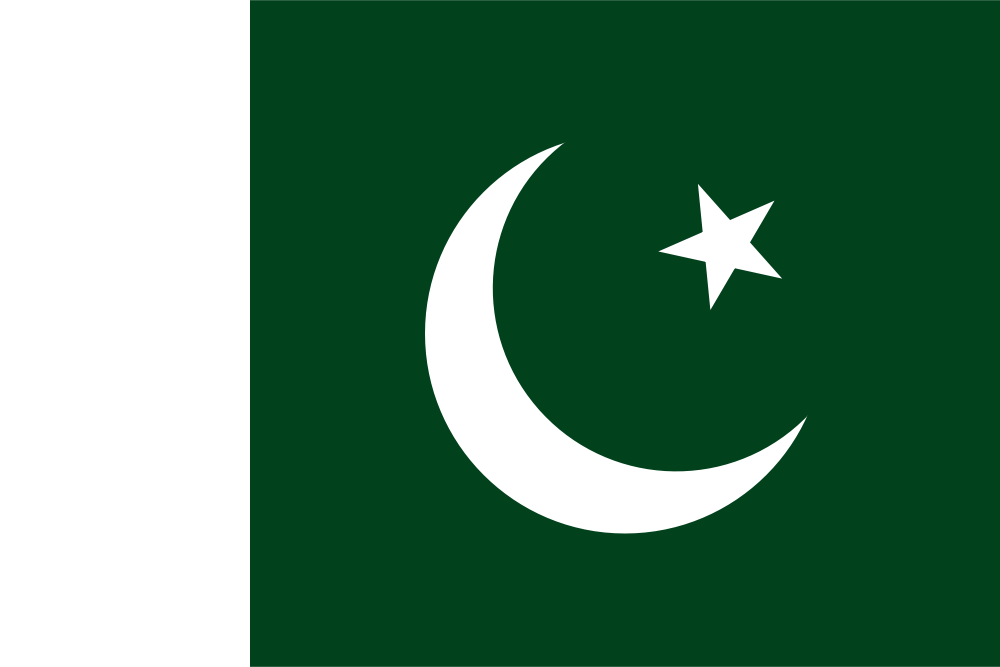
Pakistan🕣
Country in South Asia. Official name – the Islamic Republic of Pakistan. Population – 228.8 million people (as of 2020). Capital – Islamabad. Official languages – Urdu and English. Government type – federal parliamentary republic. Main religion – Islam.
Pakistan
Greeting
Greeting is an important part of a meeting, which is traditionally given considerable time in Pakistan. When interacting with a Pakistani partner, do not rush to immediately discuss business matters. Instead, invest time in the greeting process. This will help strengthen your relationship.
The accepted form of greeting in Pakistan's business environment is a handshake. Men who are friends may hug or pat each other on the hand, shoulder, or back. With foreign colleagues, formal and polite relations are maintained for quite a long time.
A handshake is always accompanied by a verbal greeting commonly used in the Arab world: "As-salamu alaykum", which means "Peace be upon you." The response should be "Wa-alaykum as-salam", meaning "And peace be upon you too."
If your conversation with a Pakistani colleague is in English, do not be surprised if, in response to your "Hello" and the polite question "How are you?", your colleague starts telling you how they are actually doing. In Pakistan, people tend to give a genuine response to this question rather than just saying "I'm fine, thank you", as is common in many other countries.
Physical contact and eye contact between genders are generally avoided due to strong Islamic traditions in the country. Foreign women should wait for a man to take the initiative before offering a handshake. The same applies to foreign men, who should observe a woman's behavior in such situations before initiating a greeting.
A traditional Pakistani greeting in formal settings involves placing the right hand over the heart while slightly nodding the head, as if bowing. This gesture expresses sincere feelings and respect for the other person. This form of greeting is also common in Arab countries, such as Iraq.
When greeting a Pakistani colleague for the first time, please be sure to show the utmost respect and courtesy.
It is customary in Pakistan to greet the eldest or highest-ranking person first. This individual is unlikely to initiate the conversation but will engage if a younger person starts speaking.
Introduction
Pakistan has several naming traditions, which vary depending on a person’s ethnic group, region, clan, or religion. Most Pakistani names have Arabic, Indo-Persian, and Turkish origins.
Family or clan identity is highly significant and is traditionally treated with great respect. For this reason, many Pakistanis add their lineage or clan name to their surname.
Titles, professional qualifications, academic degrees, and ranks are important in Pakistan. These distinctions help determine a person's status and their role within a company or organization. Therefore, when addressing a partner—especially during initial meetings or in formal settings—always mention their title, rank, or degree before their last name.
If you do not know your partner's title, professional qualification, degree, or rank (or if they do not have one), use polite forms of address such as Mr., Ms., Mrs., or Miss, followed by the person's last name.
Colleagues and peers address each other by first name. However, foreign partners should not take the initiative to use first names. Wait until your Pakistani colleague invites you to do so.
Many Pakistani women keep their maiden names after marriage, as Islamic law does not require a name change upon marriage.
Exchange of Business Cards
In Pakistani business practice, exchanging business cards usually takes place at the beginning of a meeting.
Business cards should contain all the standard information, including surname and first name, position, company name, and up-to-date contact details.
If you have academic degrees, such as a master's or doctoral degree, be sure to include them on your business card. Your status will undoubtedly be enhanced, as education is highly valued in Pakistan.
Pakistan is a multinational and multilingual country. The official languages are Urdu and English. Although the latter can be considered a colonial legacy of Britain, it is accepted and widely used in Pakistan. For this reason, the text on business cards can be in English.
There is no specific ritual for exchanging business cards in Pakistani business practice. However, it is important to remember that business cards, like any other papers or documents, should be handed over with the right hand, not the left.
When your Pakistani colleague hands you a business card, receive it with both hands and take a moment to look at the text on the card, as this demonstrates respect for your conversation partner.
After receiving a business card, do not handle it carelessly—avoid setting it aside immediately, writing on it, or bending it.
Small Talk: Overview
Small talk is important; it serves as a kind of prelude to actual negotiations. Pakistani businesspeople value getting to know their potential partners better, as relationship-building is the foundation of any business. Such conversations help establish a sense of trust between partners, which is a crucial aspect in Eastern cultures.
Personal topics in this culture are not considered taboo. You may be asked whether you are married and how many children you have, about your education, and even about the religions practiced in your culture and your own religious beliefs.
Never rush through a casual conversation. If you try to move too quickly to business discussions, your project may end before it even begins. Show genuine interest in your partner, their interests, and preferences—for example, in sports or travel. Be natural, friendly, and engaged.
During communication, especially in the presence of older people, it is important to be as polite as possible. Pakistanis generally show great respect to guests and expect the same treatment when they are visiting others.
At the initial stage of business relationships, Pakistanis tend to be somewhat formal and reserved. They believe that displaying emotions, including loud speech and expressive behavior, is a sign of immaturity and lack of experience.
As in other countries, younger generations tend to be less formal. Their communication style is often quite relaxed and easygoing.
Preferred Topics
Family matters are traditionally an important topic of conversation in Pakistani society. Show personal interest in your partner by asking about their health, work, and family. However, avoid mentioning female family members.
At the same time, share some information about yourself. Your partner will be interested in learning about your background, education, experience, and qualifications.
Your Pakistani colleague will undoubtedly appreciate positive remarks about the rich history and culture of this Eastern country. Pakistanis take great pride in their heritage and past achievements.
Pakistan is known for its festivals, national celebrations, and cultural events. Some of these have religious significance, such as Eid al-Adha (Qurbani Eid). However, there are also many secular holidays widely celebrated in the country, such as Independence Day and Pakistan Day.
Travel, including cities and attractions in Pakistan that are worth visiting.
Sports, especially cricket.
Relevant business topics.
Food, cuisine, and traditional dishes.
Taboo Topics
The topic of family is generally popular in Pakistan. However, it is best to avoid discussing female family members—wives, mothers, sisters, and especially daughters.
Religion and all matters related to Islam can be highly sensitive topics and are best avoided in conversation. Do not make any remarks that could even remotely be perceived as criticism.
It is best to steer clear of political discussions, particularly those related to regional conflicts, such as the India-Pakistan dispute over Kashmir.
Avoid discussing the politics of other countries, especially Israel and the United States.
Refrain from commenting on local issues, even if you are well-informed about them.
Personal Space
In this culture, the comfortable personal space for communication is smaller than in Central and Northern European countries or the United States. This is partly due to people being accustomed to living in relatively close quarters, making them feel comfortable conversing at a distance of less than half a meter from their conversation partner.
Do not interpret this as offensive or aggressive behavior. Try to avoid stepping back to increase the distance, as this may be perceived negatively.
While Pakistani men tend to stand close to each other during conversations, the distance between speakers increases significantly when a woman is present.
Pakistanis can be described as active and expressive conversationalists. During communication, they tend to gesture frequently and rely heavily on body language.
Physical touch is an integral part of verbal interaction in Pakistani society. This includes pats on the shoulder, arm, or back, as well as prolonged handshakes. However, this applies strictly to men—under no circumstances should men touch women.
Maintain a soft eye contact when speaking with a Pakistani partner. A direct and intense stare may be perceived as rude or confrontational.
Communication Specifics
Pakistan is a multinational and multiethnic state, so communication styles and manners may vary depending on the ethnicity of the person you are dealing with.
In general, Pakistani speech is not characterized by directness. On the contrary, their statements often contain subtext, which is influenced by factors such as the relationship between the speakers, their status in society, and the context of the conversation. Particularly important are certain gestures and facial expressions, intonation, as well as the meanings of specific words that are understood only by members of this culture.
A strong emphasis is placed on interpersonal relationships, and maintaining them requires tactfulness, avoiding harsh judgments, and generally not expressing thoughts too bluntly.
Avoiding blunt statements primarily applies to the word "no", which many people try to avoid in conversation, as it can lead to a loss of face and disrupt harmony. If a speaker needs to express a negative response, in Pakistan, it is usually done in a rather evasive manner.
During conversations, try to avoid asking general questions that require a "yes" or (especially) "no" answer, particularly if your question could be interpreted as a request. Your conversation partner may agree to do what you are asking, even if they do not actually want to. Instead of directly refusing, they may politely but vaguely express agreement. It is important to recognize nonverbal cues that reveal their true intention. The way agreement is expressed—warmly and emotionally or distantly and cautiously—can serve as a hint.
Such subtle meanings are well understood in Pakistani society. However, foreigners will need time to grasp them and learn how to respond appropriately. Therefore, during conversations, carefully and discreetly clarify what your partner means.
If you are seated at a low table or on the floor during an event, pay attention to your posture. Your conversation partner should not see the sole of your shoe, as this is considered a very rude gesture—sometimes even an insult—since feet are regarded as an unclean part of the body.
Any questions? Contact us.
Ask a Question