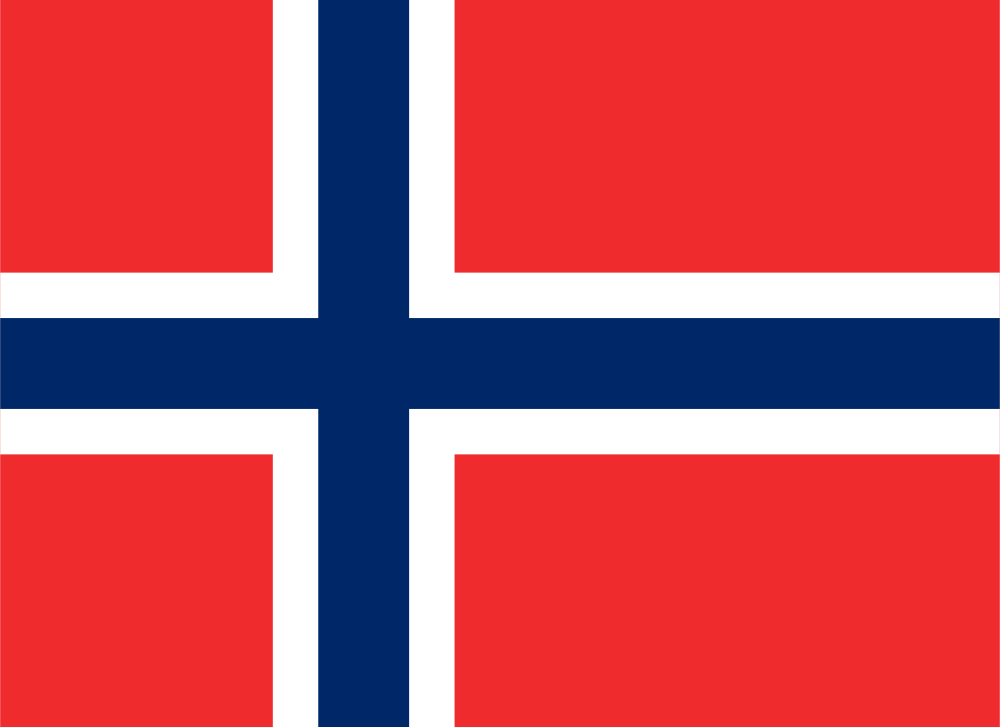
Norway🕣
State in north-western Europe. Official name – Kingdom of Norway. Population – 5.4 million (as of April 2021). Capital – Oslo. Official language – Norwegian. Government type – parliamentary constitutional monarchy. Main religion – Christianity.
Norway
Greeting
During the performance, the parties exchange a handshake, which should be sufficiently strong, but at the same time short. It is important to maintain eye contact with your partner. Sometimes Norwegians tilt their heads slightly (a kind of polite nod) as a sign of greeting.
Norwegians shake hands both before and at the end of a meeting. The notion of seniority, status, or age is irrelevant. They shake hands with someone who is standing next to them or who has just entered the room.
Both men and women shake hands during a meeting. Greetings between the sexes also take the form of a handshake. Sometimes they exchange light kisses, but this is possible if people have known each other for a long time.
During the conversation it is important to maintain eye contact with the interlocutor. At the same time, you should neither stare nor look away or hide your eyes. In this case, you may be thought of as someone who has something to hide and therefore should not be trusted.
Norwegians - men and women alike - avoid physical touching when socializing. Only if they already know each other fairly well or are friends, a light hug as a greeting is possible. And even then, touching is quite rare.
If you approach a group of people at an event in Norway, don't wait for someone to introduce you to the people around you. It is a common practice to introduce yourself by saying your name and surname and saying hello to each person in the group. This is the usual practice at both business and social events.
Introduction
When Norwegians address each other (even strangers), they use first name rather than surname. This is due to the society's strong egalitarian traditions (the idea of equal political, economic, and legal opportunities for all members of society).
However, in formal situations, as well as in initial contact, you should address your Norwegian partner using their surname rather than their first name, even if you know them. Very soon after you get acquainted, your Norwegian colleague will suggest you switch to addressing them by their first name.
Titles and degrees are not important in Norway. It is much more important what a person says and how they behave.
In some very formal situations it is necessary to use polite forms of address, which in Norway are: Herr (Mr - Sir) and Fru (Mrs - Madam).
Exchange of Business Cards
In Norwegian business practice, it is customary to exchange business cards during introductions at the first meeting, as well as at various events, conferences, and forums.
The text of the business card may be in English, as the level of English proficiency is quite high in this society.
On the business card, in addition to the company name, job title, and contact details, you can include the academic degree you hold. However, there should not be anything on the business card that even remotely looked like ostentation or boasting.
There is no special ritual for handing over a business card in Norwegian business practice.
Small Talk: Overview
During a business meeting, Norwegians give little time to small talk and prefer to go straight to discussing business matters.
Norwegians can generally be characterized as reserved and somewhat closed. In social interactions, they are reluctant to make small talk with people they do not know or barely know. Foreign businessmen should keep this in mind and assume that building personal relationships will take a long time.
Despite a certain conservatism, the Norwegians' communication style is quite informal. This is manifested, among other things, in the rapid transition to the use of first name (rather than surname), as well as in the absence of titles, ranks, degrees, etc. in their speech.
Conversation among Norwegians is more like a leisurely conversation, during which long silent pauses are not uncommon. Silence is an integral part of communication and, unlike other cultures, is well accepted in Norwegian society.
Norwegians assume that silence should be broken when there is something to say or something worth sharing. The speaker should not be interrupted, as this is considered rude and tactless.
Preferred Topics
International events and news.
Culture, traditions, history of Norway and its regions.
Nature of Norway, landscape, fjords, coastline.
Travelling, places you have visited (especially in Norway).
Sports and especially winter sports.
Plans (including family plans) for weekends, holidays.
Taboo Topics
When dealing with Norwegian partners, foreign businessmen should not emphasize their achievements and successes in any way that even remotely resembles bragging. This will jeopardize your future relations with Norwegian partners.
All religious topics are generally taboo subjects.
Avoid discussing (especially in a critical way) local problems or the actions of domestic authorities.
Conflicting foreign policy events and accompanying politics.
Personal Space
A comfortable conversation distance in Norwegian society is about or even more than 1 meter. It does not matter whether the participants in the conversation are men or women, acquaintances or strangers, natives or foreigners. With the latter, however, the distance can be even slightly bigger.
You should not try to shorten this distance, your Norwegian interlocutor will feel uncomfortable. You should also avoid any physical contact with other people while conversing.
Communication Specifics
In Norwegian society, direct and honest communication is the norm. People tend to say what they think without trying to express themselves in any allegorical form. They can easily point out an inaccuracy in your speech or a mistake if they notice it.
You should not take even a critical remark made to you as an insult or offence. Norwegians genuinely believe that only a frankly expressed opinion is constructive and will allow the relationship to develop further.
In the process of communication Norwegians prefer to rely on facts or use such information, which they know well and which they have checked. Speculation, exaggerations, subtexts, etc. will be poorly received by them.
When selecting project partners, they prefer to work with those they trust. Therefore, it is important to provide them with convincing information about you and your company.
Norwegians do not need to develop personal relationships over a long time to start a partnership. They have a pragmatic approach to business and will work with someone who honors all agreements made and meets deadlines. This is for them a manifestation of professionalism at work.
Any questions? Contact us.
Ask a Question