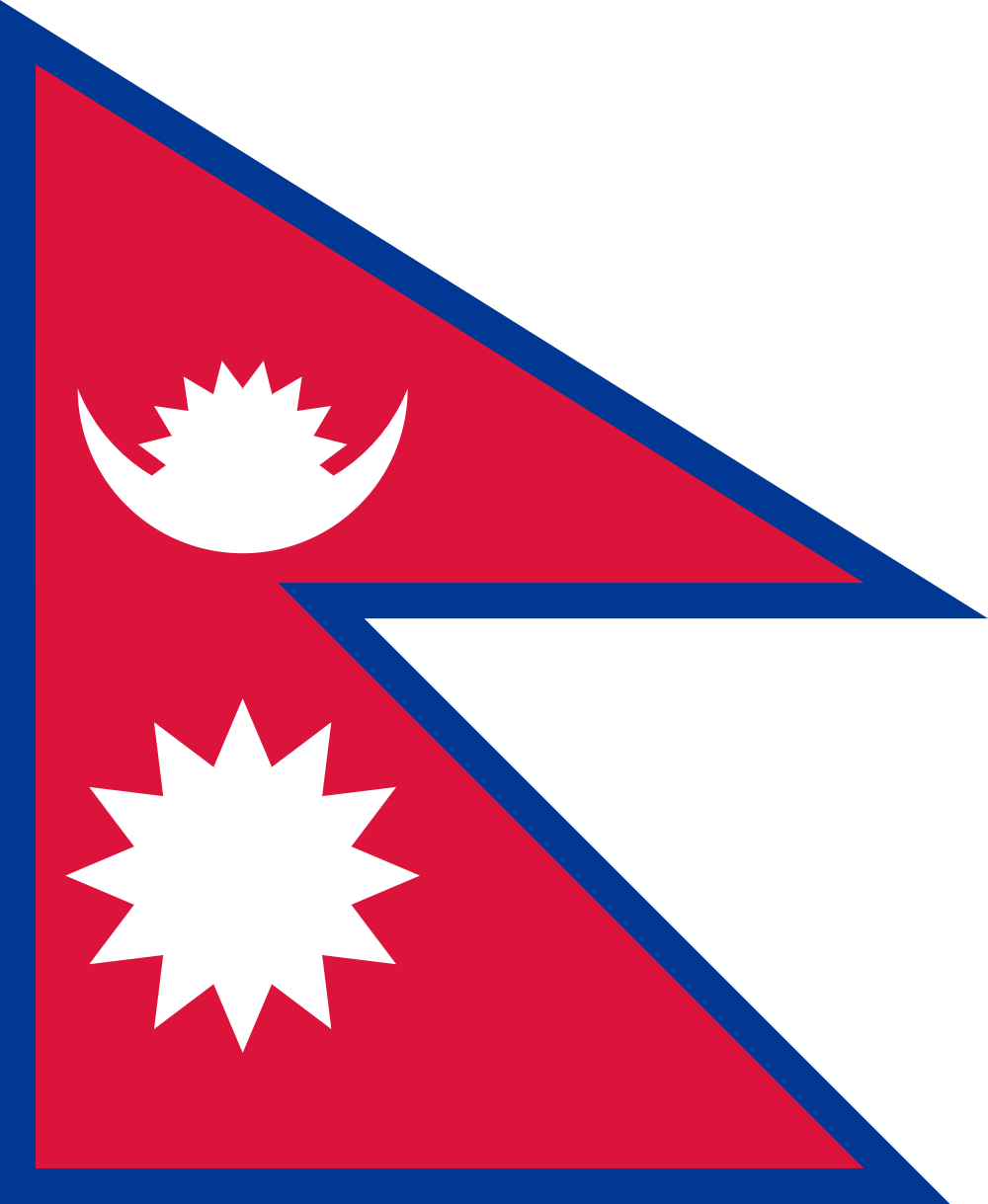
Nepal🕣
Country in South Asia, in the central part of the Himalayas, to the north of the Indian subcontinent. Official name – the Federal Democratic Republic of Nepal. Population – 30.1 million people (as of 2020). Capital – Kathmandu. Official language - Nepali. Government type – parliamentary republic. Main religion – Hinduism.
Nepal
Greeting
The traditional greeting ritual in Nepal is “Namaste”, during which it is customary to place your palms together at chest level, say the word "Namaste" (which means "I greet the divine in you"), and give a slight bow to the other person. The depth of the bow depends on the status of the person being greeted.
In business practice, the accepted form of greeting is a light handshake, which among Nepalis usually follows the traditional “Namaste”. With foreign business partners, only a handshake.
Men usually shake hands with men, and women with women. Handshakes between men and women are generally possible. Still, it is important to note that not everyone is comfortable with any form of physical contact (even handshakes) with members of the opposite sex. In such situations, men should wait for the woman to take the initiative.
If your Nepali partner's side includes several people, greet the eldest or highest-ranking person first.
Greetings such as hugs, kisses, or pats on the shoulder or arm are only accepted between relatives, friends, or people who have known each other for a long time.
Introduction
In Nepal, several naming traditions have developed over centuries of coexistence among people representing various religious sects, clans, and ethnic communities.
Nepali names, each with its own special meaning, originate from the ancient languages of Sanskrit and Pali. Newborns are often named after Hindu deities, for example, the female name «Chatushkarni», which is one of the names of Lakshmi, the goddess of prosperity and wealth.
As surnames, Nepalis often choose the name of their clan or ethnic group.
Status is important in Nepal and is influenced by age, university education, caste affiliation, and profession.
The caste system came to Nepal with Hinduism. Currently, up to 80% of the population practices this religion. Although the caste system was officially abolished in 1963, it still exists informally.
Honorary, professional, and academic titles are used alongside a person’s name or surname, with special respect given to titles such as "Doctor" or "Professor".
Without professional or academic titles, it is polite to use the respectful forms of address, Sir or Madam.
Exchange of Business Cards
Exchanging business cards usually takes place after greetings.
Titles, academic degrees, and qualifications (if applicable) should be included on the business card.
Any materials (including the business card) should be handed to or received from the partner with the right hand or both hands.
The text on the business card can be in English, as it is the language local entrepreneurs and officials use to communicate with representatives of foreign companies and organizations.
Small Talk: Overview
During a conversation, your Nepali partner may ask you direct questions related more to personal matters, such as: Are you married? How old are you? What is your family background? While this is common in Nepali culture, it’s best not to initiate similar questions toward your colleague.
Nepalis often make fairly long, silent pauses during conversation. Silence is generally well accepted in this culture, so don’t rush to break these pauses.
In Nepali society, it is not customary to speak loudly or emotionally, nor to assertively defend one’s position. Calm, gentle speech is preferred.
Preferred Topics
In Nepal, people are happy to engage in conversations about the country's culture and natural beauty. Nepalese will gladly tell you about the most scenic spots, beautiful temples, cultural monuments, and more.
Nepal’s nature is always a good topic. It’s not only mountains, it’s also plains, where a large number of people live.
Family, being an important part of life for Nepalese people, is often discussed in conversation.
Nepalese people also talk about work, entertainment (especially movies and music), personal hobbies, and more.
Local and foreign cuisines are usually of great interest, as well as cooking details of various dishes in the speakers’ cities or regions.
Taboo Topics
Avoid parallels or comparisons between Nepalese and Indians, and refrain from commenting on the appearance or accent of individuals from these two cultures.
Stay away from sensitive social issues, such as poverty, corruption, and gender or social inequality. Nepalese people are aware of their own issues but are not inclined to discuss them with foreigners, especially if the conversation takes a critical tone.
Refrain from making unflattering remarks about the Nepalese royal family.
Topics like politics, religion, and the caste system in Nepal are best avoided in small talk.
Do not use words like “poor” or “poverty-stricken” when speaking about Nepalese people (or individuals), as this can be offensive.
Topics related to sexual relationships, especially jokes, should be avoided in polite conversation.
In Nepal, it is not customary to use foul language or swear during interactions.
Topics related to money and sources of income should better be avoided.
Personal Space
The comfortable distance for conversation in Nepal is about an arm's length or slightly less. This distance is generally closer than in Western and Northern European countries.
Depending on who is participating in the conversation, the comfortable distance may vary: for instance, men conversing with one another stand relatively close, but this distance increases if a woman joins the conversation.
Conversation partners of equal status maintain direct, but not intense, eye contact.
Physical contact between men and women is not customary during public interactions, even if they are husband and wife, with bodily contact typically limited to holding hands.
People of the same gender may freely touch each other, such as lightly hugging or holding hands.
Communication Specifics
In communication, especially in formal settings, polite and courteous behavior is expected.
The Nepalese style of communication can generally be described as indirect. To avoid confrontation, Nepalese people often speak in a roundabout way, restating the same idea in different words, adding new details each time, without calling things by their exact names.
If you bring up an issue or sensitive topic in conversation, try to express it in a gentle and considerate manner, addressing it directly with the person involved.
In Nepal, it is not customary to openly express emotions, particularly negative ones, especially in the presence of other people. The Nepalese typically avoid public confrontations, arguments, or overly heated discussions.
When people tilt their heads from side to side (not turning but alternately tilting it right and left), it is often mistaken by people from other cultures as a sign of “no.” In reality, this gesture is multi-functional and can range from a silent “yes” or “thank you” to simply indicating that they are listening and agreeing with the speaker.
Any questions? Contact us.
Ask a Question