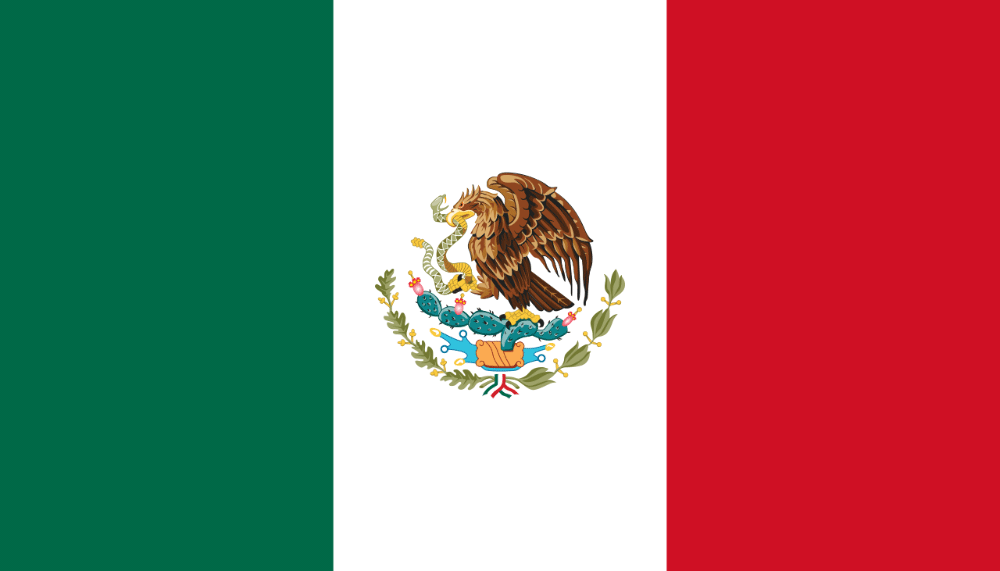
Mexico🕣
Country in the southwestern part of North America. Official name – the United Mexican States. Population – 131.4 million (as of 2020). Capital – Mexico City. Official language – Spanish. Government type – federal presidential republic. Main religion – Catholicism.
Mexico
Greeting
A common way to greet someone is with a handshake, sometimes along with a slight bow. Handshakes in Mexico can feel more personal than in other places—your business partner might hold your hand a little longer and give it a gentle shake.
The handshake should be firm and energetic, even if it lasts a bit longer than you're used to. Eye contact and a smile are important during this moment.
The tone of voice also plays a role in communication, mainly the volume. Speaking too quietly might come across as boring or like you’re not interested. Speaking at a moderate or slightly louder volume is more acceptable (just don’t shout).
If a man is introduced to a woman in a business setting, a handshake or an air kiss (cheek to cheek without touching) is appropriate—but only if the woman initiates it. If she doesn’t, a small bow is enough.
When two women meet in a business context, they usually shake hands and may give a slight bow. As their relationship develops, they might start greeting each other with an air kiss.
As you get to know your Mexican business partner better, greetings can become more personal. Between men, this can turn into a more affectionate gesture called an abrazo. It starts with a handshake, while placing your other hand gently on the person’s arm or shoulder. Then comes a brief hug: the left arm goes around the shoulder and the right hand gives three light pats on the back. It usually ends with another quick handshake.
Common greetings include: “Buenos días!” (Good morning!) – used in the morning; “Buenas tardes!” (Good afternoon/evening!) – used in the afternoon and early evening; “Buenas noches!” (Good evening/night!) – used later at night, usually after 9 p.m.
Introduction
Mexican last names usually have two parts: the father's surname followed by the mother's surname. For example, in the name Pablo Garcia Sanchez, Garcia is the father’s last name, and Sanchez is the mother’s.
When a woman gets married, she changes her mother’s last name to her husband’s father’s surname. For instance, Maria Rodriguez Perez, after marrying Eugenio Rivera Gomez, would be known as Maria Rodriguez de Rivera. Their child would have the last names Rivera Rodriguez, with Rivera being the “main” surname used in everyday situations, since people in Mexico usually go by their father's last name.
In formal communication, though, it’s best to include both surnames. That’s because many last names are widely common in Mexico, and using only one could cause confusion. Including both helps make sure your message reaches the right person. You’ll always see both surnames in official documents and correspondence with organizations.
Mexicans can also have two first names, like Juan María Ortiz Diaz. The second name doesn't always match the person's gender. It’s perfectly fine to use just the first name in conversation.
Generally, women in Mexico don’t drop their own last names and replace them with their husbands’ after marriage.
In formal, official, or even social settings, it’s a good idea to use professional titles when addressing someone. This shows both good manners and respect.
Common titles include Arquitecto (Architect), Ingeniero (Engineer), Abogado (Lawyer), and Contador (Accountant). A frequently seen abbreviation is Lic. (short for Licenciado), meaning “licensed” or “degree holder.” It’s mostly used for people with a university degree, especially lawyers and legal professionals.
When introducing yourself to a Mexican colleague, it’s helpful to include your own title or qualification, so they know your role and background.
If you don’t know your counterpart’s professional title, or if they don’t have one, use polite forms of address like Señor (Mr.) for men and Señora (Ms.) or Señorita (Miss) for women, followed by their last name.
When it comes to names and titles, just follow the lead of your Mexican colleagues. Match the level of formality they use.
In business settings, Mexicans usually don’t call each other by first name right away. It’s better to wait for them to make that move.
Exchange of Business Cards
In Mexican business culture, it’s customary to exchange business cards when being introduced during the first meeting.
The text on the card should be in Spanish, at least on one side.
Professional titles and degrees are important in Mexico, so it’s a good idea to include them on the card, along with your last name and official job title.
There’s no special ritual for handing over a business card in Mexico. During a meeting, cards are often placed on the table and can be referred to when needed.
Small Talk: Overview
Mexicans really value personal relationships with their partners, so conversations are important to them. As a rule, they engage in small talk lively and with pleasure
Small talk in this culture may take some time — sometimes quite a while. You can expect jokes, humor, and talk about family or hobbies to come up.
Make sure to leave enough time to keep the conversation going after lunch or dinner at a restaurant. This helps build stronger connections, which matters a lot to Mexican partners.
When talking, especially with older people, it's important to be polite and respectful.
Saying a few words in Spanish will leave a good impression. Mexicans appreciate the effort.
Humor is a big part of Mexican culture. A good joke is the best way out of a difficult situation.
At the end of the meeting, don’t forget to thank your Mexican colleagues or partners for their hospitality and warm welcome.
Preferred Topics
Mutual acquaintances, if there are any.
Family and anything related to home and family relationships.
Mexico’s cultural heritage and art. Your partner will appreciate it if you mention and show interest in the country’s culture.
Mexican cuisine or any other type of food.
The country you come from or represent usually sparks interest. Share something interesting or unusual about it.
Travel, personal interests, hobbies.
Sports, especially football (soccer).
Taboo Topics
All religious topics are generally considered taboo. In particular, never make any (especially disrespectful) remarks about the Virgin of Guadalupe, who is one of the most revered religious figures in Latin America.
Avoid commenting on issues that concern Mexican society, such as corruption, drugs, violence, etc. Even if Mexicans themselves openly discuss these topics, it doesn’t mean foreigners should do the same.
Don’t bring up topics related to migration in general, and especially not migration to the U.S. If, for some reason, the topic does come up, avoid calling these people “illegal migrants” (even if technically accurate). Use the term “undocumented migrants” instead.
When speaking about the United States of America, don’t refer to it simply as “America,” as Mexico is also a North American country.
Personal Space
Mexicans tend to have a smaller personal space than people from many other cultures. During a conversation, they often stand quite close to one another. Taking a step back to increase distance might be seen as unfriendly or overly formal.
Body language and gestures are an important part of communication. Mexicans tend to use expressive gestures, and may touch one another — for example, a pat on the shoulder or arm, a hug, or a gentle squeeze on the shoulder — as a sign of friendliness and warmth.
You shouldn’t try to imitate these behaviors. Body language is a subtle and complex area that’s best understood (or rather, intuitively felt) by those who grew up in the culture.
Communication Specifics
During a conversation, your Mexican partner may nod to show they are paying attention to what you're saying. However, this does not necessarily mean they agree with you.
When communicating with Mexicans, it’s important to maintain eye contact. Sometimes their gaze may be quite steady or prolonged — this isn’t negative, but rather a sign of genuine interest in the speaker.
In Mexican business culture, building personal relationships with partners is common practice. This often means that before getting down to business, Mexicans will spend time chatting about a wide range of topics, including personal matters.
Inviting a partner to a restaurant — or sharing a meal in general — is an important part of relationship-building in Mexican business culture. Business matters are usually not discussed during the meal, or only briefly toward the end.
Any questions? Contact us.
Ask a Question