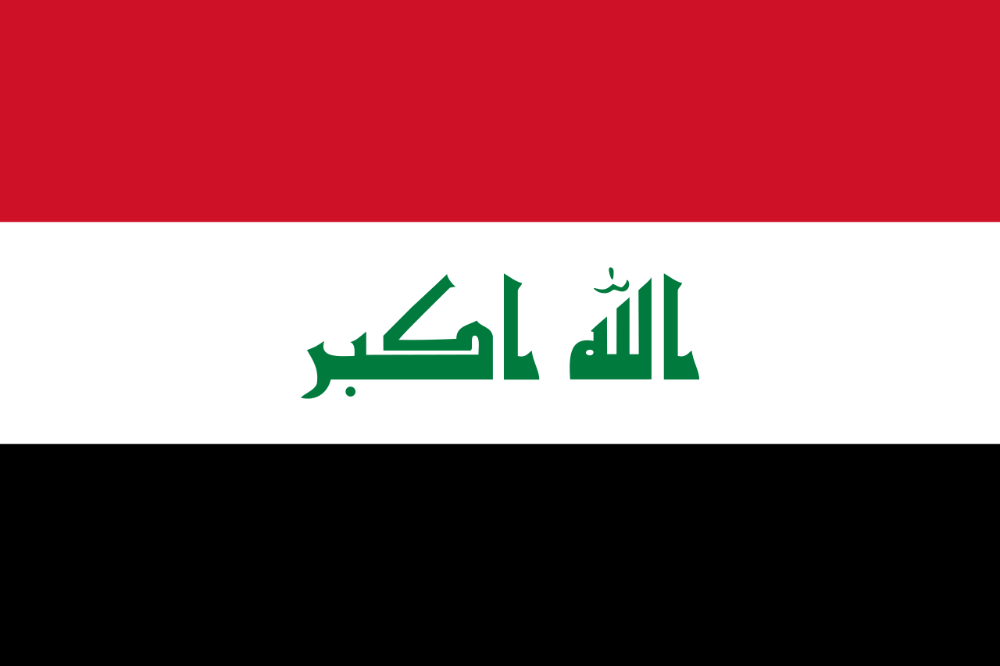
Iraq🕣
State in Southwest Asia. Official name – the Republic of Iraq. Population – 41.8 million (as of 2020). Capital – Baghdad. Official languages – Arabic and Kurdish. Government type – parliamentary republic. Main religion – Islam.
Iraq
Greeting
A handshake is one of the greetings accepted in Iraq's business environment. Partners exchange handshakes at both the beginning and end of a meeting.
The handshake of Iraqi men can be described as rather soft, but at the same time quite prolonged and without shaking. Your Iraqi partner may hold your hand in his while he asks you some general questions (such as “How are you?” and similar things. It is important not to pull your hand away, as this can be perceived very negatively.
The traditional Iraqi greeting in formal settings is a gesture with the right hand, which the speaker places on the chest in the heart area. At the same time, the speaker slightly bows his head, as if bowing to the other person. With this gesture, the speaker expresses his sincere feelings and respect towards the interlocutor.
Whatever form of greeting your partner chooses, it will be accompanied by As-salamu alaykum, which means Peace be upon you. In response, you should say Wa-alaykum as-salam, which means And peace be upon you.
If a woman enters the room, all the seated men should stand up as a sign of greeting. Everyone should also stand when an elderly person enters. The same happens when he leaves.
Physical contact, as well as eye contact between genders, is not accepted due to the strong Muslim traditions in this country. Foreign women should wait for the man to take the initiative before extending their hand for a greeting. The same applies to foreign men, who should wait for the woman's readiness to greet them.
In this Arab country, it is customary to greet the elder in age and position first. Such a person is unlikely to start the conversation themselves but will support a younger interlocutor if they start the conversation.
During greetings, Iraqis mutually ask each other questions about the health of each person present and their family. Stick to this tradition when communicating with partners in this country.
Introduction
The surnames of Iraqis are often quite complex, as they include the entire patriarchal lineage: the person's birth name, the name of their father, the name of their grandfather, the clan name, and the name of the ethnic group. A person's full surname can consist of up to six names.
An Iraqi resident uses their full name in specific, usually official, situations. The first name and surname (father's name) are sufficient in everyday business practice.
Do not switch to addressing someone by their first name. Wait until your Iraqi colleague offers you to do so. However, in the presence of others, especially lower-ranking employees, address them by their surname.
Professional titles, ranks, and degrees are of great significance in Iraq. This applies primarily to the following categories of people: government officials, professors, doctors, and respected elder individuals. When addressing these people, always use their professional title, rank, or degree.
In the company of several Iraqi partners, wait for someone (or the host of the event) to introduce you.
If the professional title or rank of your partner is unknown to you (or they simply do not have one), use polite forms of address: Mr., Ms., Mrs., or Miss, followed by the person's first name.
Exchange of Business Cards
In Iraqi business practice, business cards are a symbol of long-term relationships. They should contain all the necessary and up-to-date contact information.
If you have academic degrees or titles, mention them on your business card. Your status will be elevated, as education is highly valued in Iraq.
The text on your business card should be in Arabic on at least one side. This side should be faced when handing it to your partner.
There is no specific ritual for exchanging business cards in Iraqi business practice. However, it is important to remember that business cards, like any other papers or documents, should be handed over with the right hand, not the left, or with both hands. The same applies when receiving them.
After receiving a business card, be careful not to set it aside, write on it, or fold it.
Small Talk: Overview
In Iraqi business practice, small talk is given great importance as it serves as a prelude to actual negotiations. Iraqi businessmen are trying to get to know their potential partners better, as establishing relationships is the foundation of any business. These conversations help build a sense of trust between partners, which is very important in the Arab world.
Don’t rush through small talk in an attempt to quickly move on to business matters; doing so may result in your project ending before it starts. Show genuine interest in your partner, their interests, and preferences, such as sports or travel. Behave naturally, friendly, and with genuine interest.
While conversing, especially with older people, it is important to be as polite as possible. Iraqis generally have great respect for guests and expect the same treatment when they are guests themselves.
Although Iraqis can be quite expressive in their communication, they do not allow themselves to display emotions such as anger or rage. Accordingly, they expect their partners (especially foreigners) to control their emotions as well.
Preferred Topics
Your Iraqi colleague will undoubtedly appreciate your positive remarks about the rich history and culture of this Arab country. Iraqis are proud of their heritage and past achievements.
Show personal interest in your Iraqi partner by inquiring about their health and affairs, and asking questions about their family. However, avoid mentioning female family members.
In Iraqi communication culture, personal topics are not taboo. You may be asked if you are married, how many children you have, and what religion you practice.
Sports, especially football and basketball.
Cities and attractions in Iraq that can be visited.
Traditions and customs of the guest's culture.
Taboo Topics
Family is generally a popular topic in Iraqi business culture, but you should refrain from asking about or discussing the female members of the family – wives, mothers, sisters, and especially daughters.
Religion and anything related to Islam is a sensitive topic that is better avoided in conversation. However, your Iraqi counterpart might engage you in a discussion on this topic, as many in this culture are curious about how non-Muslims view religion. Do not make any statements that could even remotely be interpreted as criticism.
Iraqis react extremely negatively to comparisons of Muslims with fanatics or terrorists.
It is best to avoid political topics altogether, especially discussions about regional issues such as the Israeli-Palestinian conflict.
Do not touch upon the relations between Sunnis, Shiites, and Kurds when talking with Iraqi colleagues. If an Iraqi brings up this topic, better say something like “Let's hope for the best” or “Let's pray for peace among everyone.”
If you are conversing with Iraqi partners in English, ensure that your speech does not include any swearing, profanity, or vulgar language, which is quite common in American films. Iraqis will perceive this as offensive.
Personal Space
In this Arab culture, the distance for comfortable communication is smaller than in Central and Northern European countries or the USA. Try not to increase this distance, such as by stepping back, as this will be perceived negatively.
If Iraqi men stand quite close to each other during a conversation, the distance between them increases significantly when a woman is present.
Iraqis actively use body language in communication. Physical touches, such as long handshakes, are common. This, of course, applies only to men, who should never touch women under any circumstances.
Communication Specifics
Iraqis are often indirect. Their statements may contain hidden meanings influenced by factors such as the relationship between the speakers, their social status, and the general context of the conversation. Unspoken elements, certain gestures, facial expressions, intonation, and the meanings of specific words understood only by native speakers are usually important.
In Iraqi society, there is an absolute emphasis on interpersonal relationships, and maintaining these relationships requires tact, avoiding harsh judgments, and not expressing thoughts too bluntly. This especially applies to the word "no," which many try to avoid because it can disrupt harmony. If a negative response is necessary, it will be quite evasive in Iraq.
During a conversation, avoid asking general questions that require a direct (especially) "no" answer, particularly if your question can be interpreted as a request. Your Arab partner may agree to do what is asked, even if it is something they would prefer not to do. Instead of a direct refusal, they will agree politely but evasively. It is important to catch non-verbal signs of their true intention. How the agreement was expressed—warmly and emotionally or distantly and cautiously—can serve as a clue.
Emotional and expressive speech, loud enough and accompanied by active gestures, is valued in Arab culture. Conversely, a quiet, restrained, and unexpressive manner of speaking is perceived as cold and insincere. Often, how something is said is more important than what is said.
Such hidden meanings are well understood in Iraqi society. However, foreigners will need time to understand and learn to respond appropriately. Therefore, during communication, cautiously and unobtrusively clarify what your partner has said.
If you are seated at a low table or on the floor during an event, pay attention to your posture. Your partner should not see the soles of your shoes, as this is considered a very rude gesture, even an insult since feet are considered the dirtiest part of the body.
Any questions? Contact us.
Ask a Question