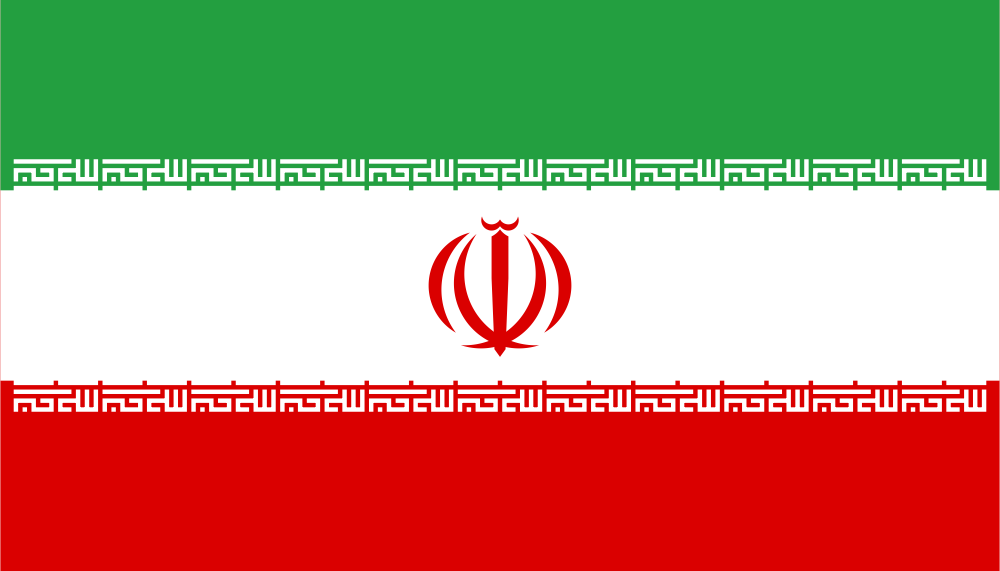
Iran🕣
State in Southwest Asia. Official name - the Islamic Republic of Iran. Population – 85.9 million people (as of 2020). Capital – Tehran. Official language – Farsi (Persian). Government type – theocratic republic with elements of religious and republican authority. Main religion – Islam.
Iran
Greeting
The accepted form of greeting in the business environment of Iran is a handshake. If a person's status is lower than that of their interlocutor, they should be the first to extend their hand for the greeting.
In the initial stages of developing business relationships, it is quite appropriate to initiate the handshake, that is, to be the first to extend your hand for the greeting. By doing so, you acknowledge the higher (relative to yours) status of your Iranian colleague (although this may not necessarily be the case). This gesture will be perceived as polite behavior on your part.
Men who are friends may hug or exchange light cheek kisses. With foreign colleagues, relationships remain quite formal and polite for a considerable time.
Verbal greetings accompanying handshakes are: “Salaam” (meaning “peace”) is used for “hello” at the beginning of the meeting and “khoda hafez” (meaning “may God protect you”) is usually said at the end.
Physical touch and eye contact between genders are not customary due to strong Muslim traditions in this country. Foreign women should wait for the man to initiate the handshake before extending their hand for the greeting. The same applies to foreign men, who should observe the woman's behavior while greeting.
The traditional Iranian greeting in formal situations is a gesture with the right hand, which the speaker places on their chest over the heart. Simultaneously, the speaker slightly bows their head, as if bowing to the other person. This gesture expresses the speaker's sincere feelings and respect towards the interlocutor. This form of greeting is also accepted in other countries in the region, such as Pakistan, as well as in some Arab countries, like Iraq.
Introduction
Under Iranian naming traditions, each person has a first name and a last name. It is possible to have two first names, one being the primary and the other supplementary. Middle names or patronymics are not customary in this culture.
To some extent, Iranian names reflect a person's background, both in terms of family lineage and religious traditions. For example, male names like Mohammed or Ataollah are linked to some Muslim themes and are given to children in more conservative families.
Positions, professional qualifications, academic titles, and degrees hold great significance in Iran. These titles help understand the status of the person you are speaking with and establish their position in a company or organization.
If the position, professional qualification, degree, or title of your partner is unknown to you (or if they simply do not have one), use the following polite forms of address (of course, if the conversation is in English): Mr, Ms, Mrs, Miss, followed by the person's last name.
Traditional polite forms of address in Iran are as follows: the word "Agha," which can be used either before or after the name when speaking to a man, and the word "Khanum," which can also be placed before or after the name when speaking to a woman.
Foreign partners should not take the initiative to switch to addressing by first names. Wait until your Iranian colleague offers you to do so.
Iranian women are not required to change their maiden name to their husband's surname after marriage, and many of them keep their maiden name. However, they may add their husband's surname to their own. In writing, such a double surname is written with a hyphen.
Exchange of Business Cards
In Iranian business practice, exchanging business cards typically occurs between individuals holding certain (quite high) positions in their companies.
Business cards should contain all the necessary standard information, including last name and first name, position, company name, and current contact details. Be sure to include your professional qualifications if you have any.
If you have academic degrees or titles, such as a master's or PhD, include them on your business card. Your status will undoubtedly increase, as education is highly valued in Iran.
Iran is a multinational and multilingual state. The official language is Farsi (also called Persian). The majority of the population speaks it. While Azerbaijani is the second most common language, preparing business cards in Farsi is still advisable. The other side can be in English or your native language.
Iranian business practice has no special ritual for handing over a business card. Mind this: business cards, like any other papers or documents, should be handed over with the right hand, not the left. When handing over a business card to an Iranian colleague, hold it so that the text in Farsi is on the front side.
When your colleague from Iran hands you a business card, take it with both hands and pay attention to the text on the card, thereby showing respect to your interlocutor.
Upon receiving a business card, do not handle it carelessly, such as setting it aside, writing on it, or bending it.
Small Talk: Overview
Small talk is given great importance in the business practices of Iran; it serves as a kind of prelude to the actual negotiations. Iranian businessmen consider it important to get to know their potential partners better, as establishing relationships is the foundation of any business. During such conversations, a sense of trust can be built between partners.
Don’t rush through small talk. Attempts to quickly move on to discussing business matters may result in your project ending before it even starts. Iranians prefer longer, sometimes veiled statements rather than short and direct ones.
Do not openly promote your products (or yourself personally) when communicating with Iranians, even if you or your company have achieved significant success in a particular area. It is important to maintain a modest and reserved line of behavior in this society.
During communication, especially with older people, it is important to be as polite as possible. Iranians generally show special respect to guests and are renowned for their hospitality.
At the initial stage of developing business relationships, Iranians usually behave somewhat formally and rather reservedly, considering that showing emotions, including loud speech and expressive behavior, is a sign of immaturity and lack of experience.
Preferred Topics
Your positive remarks about the rich history and culture of Iran will undoubtedly be appreciated by your Iranian partner. Iranians are proud of their heritage and past achievements.
Family matters are traditionally an important topic of conversation in Iranian society. Show personal interest in your partner, inquire about their health and affairs, and ask questions about their family. However, avoid mentioning female family members.
At the same time, share information about yourself. Your partner will be interested to know about your background, education, experience, qualifications, and more.
Discuss travel, including cities and landmarks in Iran that can be visited.
Taboo Topics
The topic of family is generally popular in the business culture of Iran, but it is best to avoid questions about the female members of the family – wives, mothers, sisters, and especially daughters.
Do not make statements that even remotely emphasize the superiority of the West over Eastern, and particularly Iranian, civilizations.
Do not associate Iran with the Arab world and do not refer to Iranian Persians as Arabs, as they are not. Arabs do live in Iran (about 2% of the total population), but they are just one of the many ethnic groups in the country.
Religion and everything related to Islam is a rather sensitive topic that is better left untouched in conversation. Avoid any statements that could be perceived as criticism.
It is best to avoid political topics altogether, especially discussions about what is happening in the region and the activities of the Iranian government.
Avoid topics popular in Western society, such as women's rights, the LGBT movement, civil liberties, and others.
Personal Space
In this culture, the distance of comfortable communication is smaller than, for example, in Central and Northern European countries or the USA.
If your partner in Iran stands too close to you during a conversation, do not consider this offensive or even aggressive behavior. Try not to increase the distance by taking a step back, as this will be perceived negatively.
While Iranian men stand quite close to each other during conversations, the distance between speakers significantly increases when a woman is present.
Physical contact between people of the opposite sex is not accepted in Iranian society. Only friends or relatives can do it.
During communication, interlocutors of the same gender, equal in position or status, and close in age maintain eye contact with each other. This is not encouraged (instead, the gaze should be lowered) when men and women or people of different age groups are conversing (in the latter case, younger participants generally avoid direct eye contact with older ones).
Communication Specifics
Iran is a multinational and multi-ethnic state, so the style and manners of communication can vary depending on the ethnicity of the person you are dealing with.
In general, Iranian speech is not characterized by directness. On the contrary, they often speak figuratively, not calling things by their names. In communication, the main thing for them is not to offend the interlocutor or put them in an awkward position, so hidden subtext is significant, which can be expressed through non-verbal communication – gestures, facial expressions, intonation, as well as the use of specific words understood only by native speakers.
In Iranian society, the absolute emphasis is on relationships between people, and to maintain them, it is important to be tactful, avoid harsh judgments, and generally not express thoughts too straightforwardly.
The avoidance of sharp statements primarily applies to the word "no," which many try not to use in speech, as it can lead to a loss of face and thus disrupt harmony. If the speaker needs to express a negative response, in Iran, such a statement will appear rather evasive.
During a conversation, try not to ask general questions that require a "yes" or (especially) "no" answer, especially if your question can be interpreted as a request. Your partner may agree to do what is asked, but it will be something they do not want to do. Instead of a direct refusal, they may politely but evasively agree or say, "I will think about it," or "I will see what can be done."
Such hidden meanings are well understood in Iranian society. However, foreigners will need time to understand and learn to respond to them adequately. Therefore, during communication, carefully and unobtrusively clarify what your partner has said.
If you are sitting at a low table or on the floor during an event, pay attention to your posture. Your partner should not see the sole of your shoe, as this is considered a very rude gesture, even an insult because feet are considered the dirty part of the body.
Any questions? Contact us.
Ask a Question