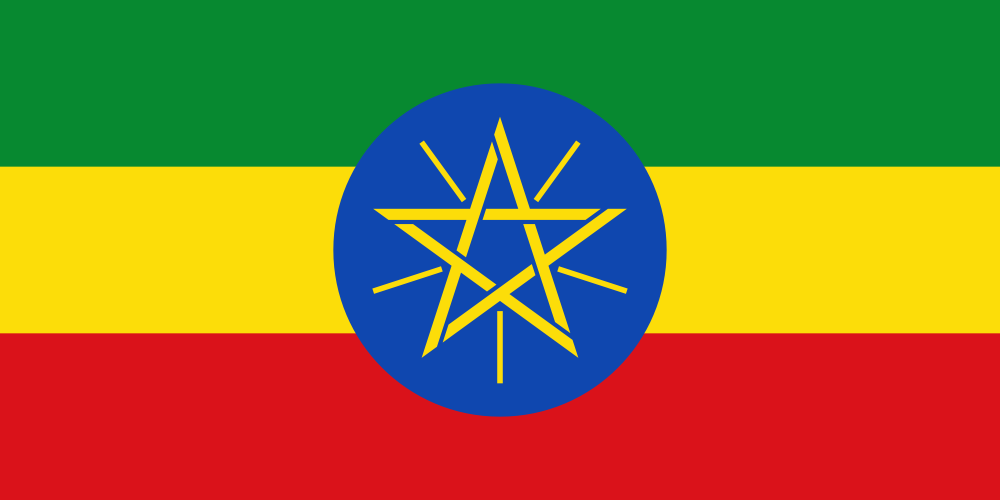
Ethiopia🕣
Country in the northeast of Africa. Official name – the Federal Democratic Republic of Ethiopia. Population – 120.3 million (as of 2020). Capital – Addis Ababa. Official languages – Amharic, Oromo, Somali, Afar, and Tigrinya. Government type – federal parliamentary republic. Main religion – Christianity.
Ethiopia
Greeting
Greetings are quite formal and polite, especially early in a business relationship. A traditional form of greeting is a fairly long yet gentle handshake, accompanied by direct eye contact.
Handshakes are typically exchanged between men. If a woman is among the Ethiopian partners, a male foreigner should wait for her to initiate the handshake before extending his hand in greeting.
In Ethiopia, it is customary to show respect to elders—both in terms of age and position. Such individuals should be greeted first. For example, a younger person greeting an older colleague may touch the elder's right hand with their left during the handshake, as if offering both hands.
Ethiopian men who practice Islam do not usually shake hands with women. This is only acceptable if they are close relatives or have long-standing friendships. In any case, the man should wait for the woman to initiate the handshake. If she does not, a respectful nod or slight bow is sufficient.
People who are friends may greet each other with a hug and kisses—usually three, but if they haven’t seen each other in a long time, there may be more.
It's important not to rush through greetings. Each person should be given adequate attention during the exchange.
A formal greeting in Amharic is Tena Yistilign.
Introduction
A resident of Ethiopia typically has a first name and a last name, without a middle name or patronymic, for example, Seyoum Mesfin (a well-known politician in the country). When moving to other countries (especially Western ones), Ethiopians sometimes use their father's name as a middle name. In such cases, the surnames of family members may differ, which can cause some confusion.
In official, formal, and business communication, use the partner's titles, degrees, or ranks when addressing them, if applicable.
When it comes to the use of names and titles/ranks, follow the example of your Ethiopian colleagues. Maintain the appropriate level of formality according to the situation.
Don't forget to mention your job titles, professional qualifications, academic titles, and degrees during introductions, and also include them in correspondence with Ethiopian partners. This will help them better understand the level of your authority, especially during decision-making processes.
If the professional title or rank of your partner is unknown to you (or does not exist), use polite forms of address such as Mr, Ms, Mrs, or Miss followed by the person’s last name.
• Women generally do not change their surname after marriage.
Exchange of Business Cards
In addition to standard information (name, surname, company name, and contact details), be sure to include your job title or position within the company, as well as any other possible credentials. This will help your Ethiopian colleague understand your place within the organizational hierarchy you represent.
The business card text can be in English, which aligns with the expectations of the business community in the country. However, your Ethiopian colleague will be pleasantly surprised to see the text in Amharic (the official language of Ethiopia).
Overall, exchanging business cards is not an essential element of business communication in Ethiopia, and many businesspeople may not even have them. Accordingly, there is no specific ritual involved in handing over a business card. The only important point is to offer the card with your right hand (or with both hands), but never with your left hand.
Small Talk: Overview
During conversations, it is important to maintain a pleasant and welcoming atmosphere that fosters the development of relationships between participants.
Initial interactions are typically marked by politeness and a relatively formal tone. A reserved, respectful way of speaking—without showing too much emotion—is likely to be appreciated.
It is customary to listen attentively to the speaker, especially in the early stages of building a relationship. The same behavior is expected from guests, particularly foreigners.
Your partners in Ethiopia will generally express their opinions and ideas quite directly. You might not notice this during the first meeting, but over time, you will see it. Ethiopian businesspeople are typically more direct in communication than is common in other African countries and especially in many Asian cultures.
In Ethiopian culture, a person's position within a company, their status, and their age are important. This should be taken into account, particularly when interacting with older individuals.
Preferred Topics
Show interest in Ethiopia—its culture, sights, and attractions. Ethiopians take great pride in their country and will appreciate your curiosity about what’s happening there and how the country is developing.
Positive remarks about Ethiopia in general will leave a good impression on someone from the local culture.
Family and family matters: It’s common in Ethiopia to talk about one’s family. If the topic feels a bit personal to you, try not to abruptly change the subject. Instead, gently steer the conversation toward an area you’re more comfortable with.
Don’t be surprised if health comes up in conversation with your Ethiopian colleague—it’s a common topic in social interactions.
Taboo Topics
Many Ethiopians are religious and rather conservative. Avoid making even subtle or indirect critical remarks about any religion or someone’s religious beliefs.
In general, it’s best to steer clear of political topics, especially any criticism of the state or government. You should also avoid saying that life is "better" or "safer" in other countries.
Do not ask your Ethiopian colleague which ethnic group they belong to—this can be taken very negatively. Instead, you can ask which area or region their family comes from.
Personal Space
Comfortable personal space among Ethiopians—even those from different ethnic groups—is smaller than in many other cultures, typically less than an arm’s length.
Ethiopians generally feel comfortable being physically close to one another. During conversations, they often touch each other (e.g., on the arm or shoulder) to show engagement and interest in the discussion.
Touching—on the hand or shoulder—is common during conversations between people of the same gender as well as between men and women. The exception is among those who practice Islam; according to Islamic customs, physical contact between unrelated men and women is not allowed.
It’s common to see people, including those of the same gender, walking hand in hand on the streets. This is a sign of friendship, not necessarily a romantic relationship.
Maintaining direct eye contact during a conversation with your Ethiopian colleague is important—it shows your interest and attentiveness.
Communication Specifics
Communication in Ethiopian society is fundamentally based on relationships built on mutual trust. A potential partner in Ethiopia will first need to get to know you well before they are willing to embark on a joint project. Rushing into business matters prematurely can result in losing the partnership altogether.
As the relationship develops and trust is established, you will notice a transformation in your Ethiopian counterpart: they will express their views more openly and directly, respond candidly to proposals, and even take the initiative to make suggestions. The personal element will always remain an integral part of communication.
Pay close attention to your partner’s communication style. If they remain reserved and formal, it indicates that trust has not yet been fully developed, and further effort will be required. If a significant amount of time has passed and this distance persists, it may be worth reflecting on whether there are deeper issues affecting the relationship.
The communication style of Ethiopian colleagues may vary depending on the language used. When speaking English, they generally aim to convey their thoughts clearly and directly, ensuring their message is accurately understood. Since English is a second language for most Ethiopians, after Amharic, speakers make a conscious effort to avoid ambiguity and the potential for misinterpretation.
When conversing in their native language (Amharic or another local language), Ethiopians tend to be less direct. They often use expressions and linguistic structures that can be interpreted differently depending on the context and situation.
Any questions? Contact us.
Ask a Question