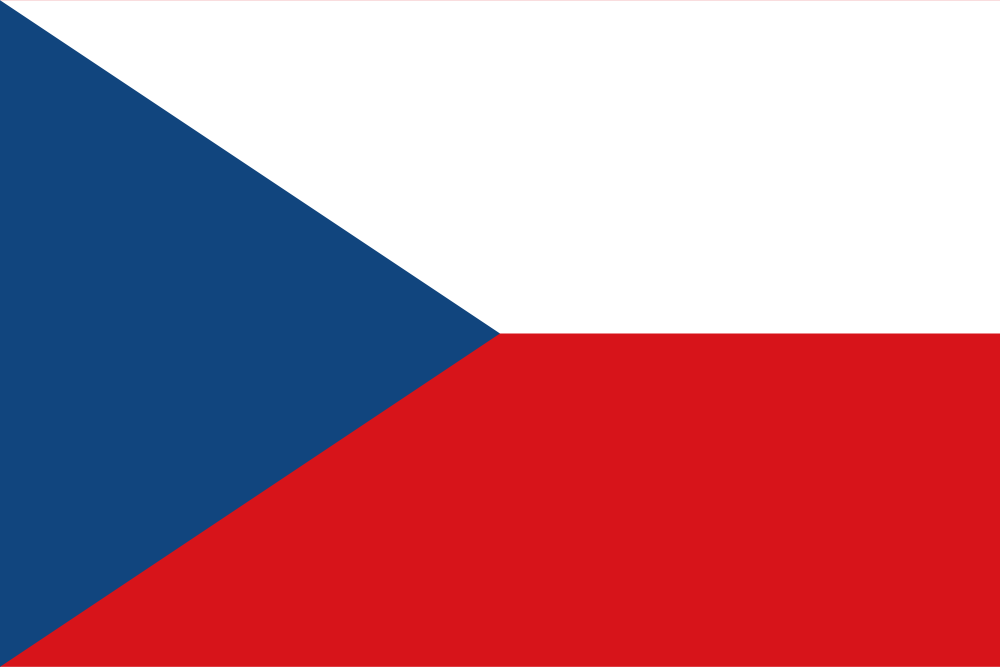
Czechia🕣
State in Central Europe. Official name – Czech Republic. Population – 10.7 million (as of December 2021). Capital – Prague. Official language – Czech. Government type – parliamentary republic. Main religion – Christianity.
Czechia
Greeting
The handshake is a traditional form of greeting in Czech society. This ritual not only begins but also ends every meeting in both business and social contacts.
During the meeting (or farewell), shake hands with everyone present. It is important to maintain direct eye contact with your partner.
A handshake at the beginning of a meeting is accompanied by a verbal greeting. These include: Dobrý den! (Hello!); Dobré ráno! Dobré jitro! (Good morning!); Dobré odpoledne! (Good day!); Dobrý vecer! (Good evening!)
During farewell, the handshake is accompanied by the verbal Na shledanou! (Goodbye!).
In your first contacts with Czech partners, the greeting may be somewhat formal and reserved.
It is a good idea to learn a few phrases in Czech. Your partner in this country will certainly appreciate it.
If you are meeting with a group of potential Czech partners, wait until you are introduced. If a colleague from the Czech Republic is your guest, remember to introduce him or her to other people during the meeting. Self introductions are not very common in Czech business practice.
In the case of a group meeting, your Czech partner is likely to introduce you first to the women present and then to the men, starting with the older ones.
It has recently become common practice in international corporations, which also have subsidiaries in the Czech Republic, for colleagues to call each other by their first names, regardless of status. This is more common among younger employees.
Introduction
Most Czechs have only first and last names, with no middle names or patronymics. During the introduction, partners should be called by their last names, not their first names. The polite forms of address are Pan (Mr.) and Pani (Ms).
Women's surnames often end in "-ová" or "-á". This ending is added to the husband's surname, e.g. Pan Novák and Paní Nováková.
In Czech companies, hierarchical traditions are still quite strong. This is particularly manifested in the way people address each other, when the title or professional qualification (or even academic degree/title) of the person is given instead of the name (e.g. Mr General Manager).
Formal style is important to maintain in dealing with the older generation. With younger colleagues, you will quickly switch to the first name basis, but you should wait for the initiative from your Czech partner.
An important element of Czech naming traditions is the day of the angel or name day, known as svatky. Every person receives, in addition to the name given to them by their parents, a name corresponding to the day of their birth. Such names are listed on the calendar for each day of the year. In the Czech Republic, this second "birthday" is usually celebrated as well.
Exchange of Business Cards
Exchanging business cards is an indispensable part of business etiquette in the Czech Republic. They are exchanged quite often, so you should have an ample supply of business cards with you.
The business card should contain both the traditional information (first name, surname, position, company name, all the necessary addresses and telephone numbers) and additional data which will help the Czech colleague know a little more about the partner and better understand who he does business with.
Such additional data include academic titles and degrees, professional qualifications, membership in some organisations, etc.
The text on the business card may be in English. Its version in Czech would be great, especially if you intend to stay in the country for a longer period of time.
There is no special ritual for exchanging business cards in the Czech Republic.
Small Talk: Overview
When starting a business meeting, Czechs will not immediately start discussing business matters. It is important for them to get to know you better, so don't be surprised if your first conversation is far from the business itself.
The Czech communication style may be described as polite, reserved and rather formal in the initial stage of business communication. Do not forget to use insignia and various regalia when addressing your conversation partner (if there are any).
In the beginning communication style in general should be polite and neutral. It is only over time, as the partners get to know each other better, that meetings can become more emotional and relaxed.
Preferred Topics
Travels, countries and places you have visited.
Czech sights, nature, cultural monuments.
Sports, especially football and hockey. It would be nice if you gave the names of the best Czech hockey players, including those who played for the NHL.
Beer, types of beer.
Art, culture.
Taboo Topics
Political topics should be avoided. Czechs often discuss both domestic politics and various international events. However, they prefer to have such conversations among friends and acquaintances rather than with business partners.
You should also avoid touching on topics related in any way to the historical past of the Czech Republic. Any value judgements should be avoided, as they may be misinterpreted by your partner.
Family and family issues, any personal topics.
Controversial social or political topics.
Personal Space
The distance of comfortable communication in the Czech Republic is usually an arm's length or slightly longer. This is the usual comfort zone of talking people in most Western and Central European countries.
Physical contact during communication is not accepted in any of its forms, be it patting, hugging etc. The exception is the handshake, which people exchange during greetings or goodbyes.
Even close friends and colleagues do not exchange kisses on the cheek when they meet, although this is customary in neighboring countries. The greeting is done on a verbal level with the word "dobrý den".
Communication Specifics
In general, the manner of communication in the Czech business community can be described as restrained and rather direct. This means that in their speech there is no place for exaggerations, colorful expressions, comparisons, etc. The Czechs believe one should call a spade a spade.
However, during a business meeting, when listening to your interlocutor, you will sometimes have to "read between the lines" because Czechs may express their thoughts in a word or tone that they think will be understood by people with whom they have been working together for some time. In such cases, verbal communication may be minimal and gestures, facial expressions and body language will become particularly important.
Czechs do not always directly express their disagreement with something. Here again, non-verbal details are important, such as looking down or long silent pauses during a conversation. They tend to take a generally non-confrontational stance in controversial situations.
Establishing relationships and building a network of contacts is of great importance in Czech business culture. Building trust in relationships takes time and sometimes considerable effort, but this investment will certainly pay off.
Any questions? Contact us.
Ask a Question