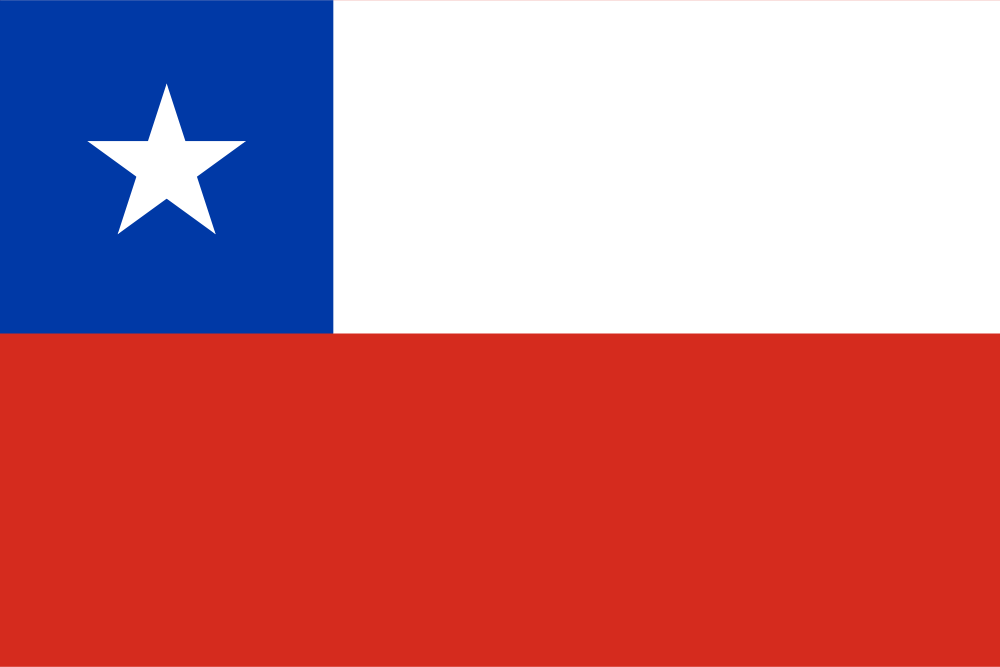
Chile🕣
Country in the southwest of South America. Official name – the Republic of Chile. Population – 19.4 million (as of 2020). Capital – Santiago. Official language – Spanish. Government type – unitary presidential republic. Main religion – Catholicism.
Chile
Greeting
In Chile, people usually greet each other with a handshake, especially in business settings. It’s most common between people of the same gender. If you’re a man, it’s polite to wait for a woman to offer her hand first.
If you’re meeting with a group, it’s important to say hello to each person individually. Offering only a general greeting to the group may be perceived as impolite. Make sure to greet everyone at the table or in the room. Skipping individual greetings can seem rude.
Try to maintain eye contact when greeting someone—it shows respect and attentiveness.
In meetings, it’s good to pay a bit more attention to the person who’s either the most senior in the company or, if that’s not clear, the oldest person in the group.
First-time meetings might feel a bit formal, but follow-up meetings are usually warmer and more relaxed.
A traditional Chilean greeting among friends, family, and longtime business partners is called an abrazo. Men usually give a light hug while shaking hands and patting each other on the back or shoulder. Women often do the same but may also give light kisses on the cheek.
Common greetings in Chile include: “Buenos días” (Good morning), “Buenas tardes” (Good afternoon), and “Buenas noches” (Good evening).
Introduction
In Chile, like in many other South American countries, people usually have two last names: the father’s last name comes first, followed by the mother’s. For example, Maria Silva Santiago is the daughter of Mr. Silva and Mrs. Santiago. The father’s surname—Silva, in this case—is considered the “main” or official last name, and it’s the one most people use in everyday situations.
When women get married, they sometimes add their husband’s last name to theirs, using the word de. So if Maria Martinez Diaz marries Arturo Beeche Santiago, she might become Maria Martinez de Beeche. In this case, you would address her as Señora Beeche.
When meeting someone for the first time, especially in formal or even social settings, it’s best to use polite titles like Señor (Mr), Señora (Ms), or Señorita (Miss), followed by the person’s last name.
In early business interactions, Chileans typically address foreign partners by their last name rather than their first name, and they usually expect the same in return. If the person has a professional or academic title, be sure to use it too.
In formal settings, people often use professional titles like Doctor (Dr.), Licenciado (Lawyer), Ingeniero (Engineer), or Profesor (Professor) when addressing others.
If you don’t know someone’s title—or if they don’t have one—it’s safest to stick with Señor, Señora, or Señorita plus their last name.
When it comes to names and titles, just follow your Chilean colleagues’ lead. Stick to a more formal tone at the beginning of the relationship, and wait for them to suggest switching to first names.
Exchange of Business Cards
Business cards are exchanged frequently in Chile, so it’s a good idea to bring plenty with you.
Your card should include all important details, such as your job title or position in the company, and any relevant qualifications or academic degrees.
Keep the design simple and professional. Flashy fonts, bright colors, or excessive logos and symbols can come across as showy or in poor taste.
At least one side of your business card should be in Spanish.
When giving someone your card, make eye contact and smile. If someone gives you their card, take a moment to look at the information—it shows respect.
It’s standard practice to give your card to everyone attending the meeting, except for secretaries.
Small Talk: Overview
Building trust and mutual understanding is a key part of communication in Chilean culture. This can take time, so be prepared to talk about more than just business.
Show some interest in your Chilean colleague’s family. It’s common to ask how their spouse or children are doing. Be ready for them to ask you similar questions about your own family—it’s seen as a friendly gesture.
Conversations with Chileans can be quite lively. People often speak with emotion, especially when they care about the topic. It’s not unusual for them to interrupt each other, jump between subjects, or get very animated during discussions.
Chilean Spanish is a unique variation of the language, spoken across most of the country. It differs noticeably from standard Spanish, especially in pronunciation, but also in grammar and vocabulary.
When speaking with Chilean colleagues, it’s important to show extra respect to older individuals. Make sure to address them politely and give them appropriate attention during conversations.
Preferred Topics
Travel: Chileans love to travel, both within their own country and to other parts of the world. They are happy to engage in conversations on this topic and are also glad to recommend interesting places in Chile to foreigners.
Family: In Chilean society, family is by no means a taboo topic. On the contrary, your conversation partner will gladly engage in such a discussion. It shows genuine interest in the person you are speaking with.
Chile’s history and economy, the country’s culture, its cuisine, and Chilean wines – all of these topics will help you make a good impression. It is a good idea to prepare for your trip to Chile by learning about its most famous landmarks.
Positive impressions of Chile, its nature, landscapes, specific regions, or cities.
Sports, especially football (soccer), skiing, and fishing.
Taboo Topics
Do not bring up topics related to the country’s indigenous population, ethnic groups, or national minorities.
Religion is traditionally considered a taboo topic in any society.
Avoid comparing Chile with other South American countries, particularly Bolivia and Peru, and especially Argentina (due to past border conflicts between the two nations).
Refrain from commenting if your Chilean colleague begins criticizing government policies or specific decisions. As a foreigner, it is generally not appropriate to take a stance or, even more so, to express it publicly in such situations.
The period of Augusto Pinochet’s rule remains a sensitive subject in Chilean society. Even mentioning that era can provoke an emotional reaction from your conversation partner.
Avoid discussing topics related to profession or work, especially salary levels or specific expenses.
When talking about the United States of America, do not refer to it simply as "America" or its citizens as "Americans," since people from Central and South American countries also consider and refer to themselves as Americans. It’s better to use terms like “US Americans” or “People from the United States.” Additionally, the term Latin America is not widely used in this region.
Personal Space
The comfortable distance for communication is smaller than in some other cultures. During conversations, people here tend to stand quite close to each other. This is part of Chile’s warm and personal communication style.
Try not to take a step back during a conversation if you feel your conversation partner is standing too close (which might be considered unusual in your own culture). Doing so can be perceived as unfriendly or even rude.
Touch is an important element of communication. During conversations, Chileans may often touch each other — for example, patting one another on the shoulder or arm, hugging, or gently squeezing the other person’s shoulders — as a way of expressing friendliness and goodwill. At the same time, excessive gesturing during conversation is generally not the norm.
It is important to maintain direct and consistent eye contact while speaking. This demonstrates sincerity and interest in the conversation.
Do not try to imitate Chilean body language. Nonverbal communication is a complex aspect of culture that is typically well understood, or rather, instinctively felt, only by members of that specific culture.
Communication Specifics
At the beginning of your contacts with Chilean partners, it is important to follow proper protocol. Communication is generally reserved and formal. Use appropriate forms of address.
However, over time and as more friendly relationships develop, communication tends to become more emotional and warm. Try to be a sincere and genuinely interested conversation partner.
Chileans are generally quite straightforward communicators, and they usually express their opinions openly. However, if their opinion might hurt someone’s feelings to some extent, they are more likely to express it in a veiled or somewhat vague way.
During conversations, Chileans always take into account the overall context of communication, as well as factors such as the social status of the conversation partner, the setting, and the nature of the relationship between the speakers. They often exchange nonverbal signals that are understood and commonly accepted within their culture.
In unfamiliar situations, Chileans tend to prefer cautious, neutral, or even friendly statements to avoid accidentally provoking conflict or causing someone to "lose face."
Any questions? Contact us.
Ask a Question