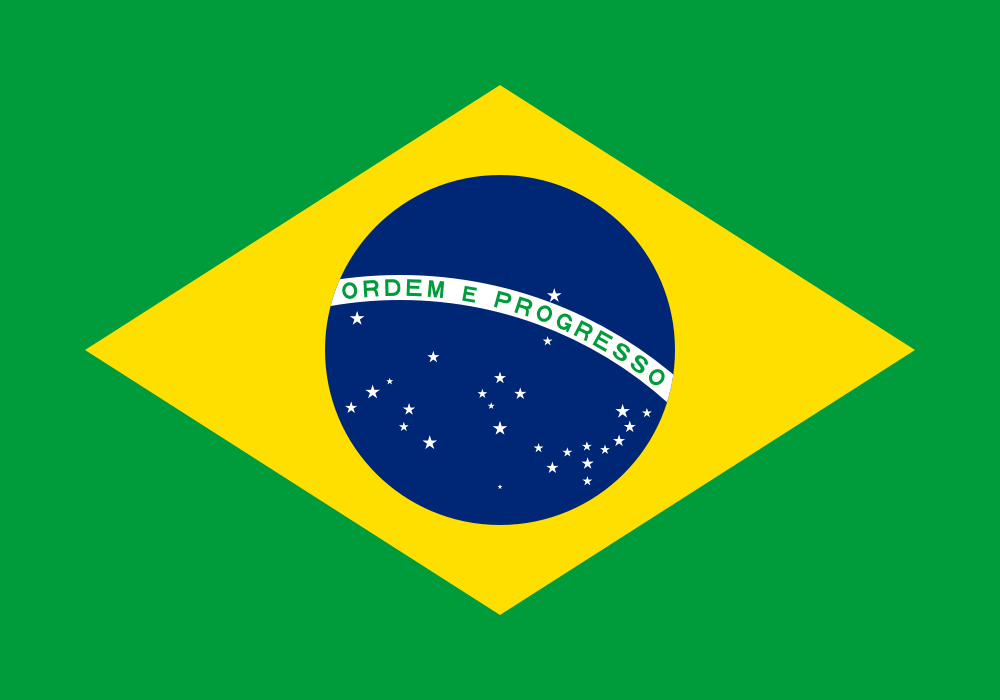
Brazil🕣
Country in the eastern and central parts of South America. Official name – the Federative Republic of Brazil. Population – 215.3 million (as of 2020). Capital – Brasília. Official language – Portuguese. Government type – federal presidential republic. Main religion – Catholicism.
Brazil
Greeting
Saying hello and introducing everyone is an essential part of the meeting, as it helps establish a business relationship. Right from the first meeting, your Brazilian partners may greet you warmly and with a lot of emotion. How you respond can really influence how your future cooperation goes, since first impressions matter a lot.
A handshake is the usual way to greet someone. Be sure to shake hands with everyone at the beginning and end of the meeting. Handshakes in Brazil tend to be warm and can last a bit longer.
Physical contact, such as a pat on the back or a hug, is also common. If you seem uncomfortable or avoid these gestures, it might be taken the wrong way. As your relationship grows, your Brazilian partners might become even more open and friendly.
If you know the job titles of the people you're meeting, start by greeting the person with the highest position, then go down the line.
When greeting a woman, wait for her to offer her hand first.
Try to keep steady eye contact during the conversation—it shows interest and respect.
Introduction
Forms of address in Brazil tend to be quite formal, as social recognition, status, and age are generally very important.
When speaking to someone or making introductions, it’s common to use professional titles, academic degrees, or job positions—for example: Doctor Santiago, President García, or Executive Sanchez (in Portuguese: Doutor Santiago, Presidente García, Executivo Sanchez).
The honorary title “Doctor” (Doutor or Doutora) is often used to show respect, especially toward older individuals—even if they don’t actually hold a doctoral degree.
You might come across situations where someone introduces themselves using their title or job role along with their first name (not their last name), and they may prefer to be addressed that way.
If no titles or degrees are involved, it’s polite to use “Senhor” (Mr.) or “Senhora” (Mrs./Ms.) followed by the person’s last name.
Exchange of Business Cards
Always carry plenty of business cards with you, as everyone at the meeting is expected to receive one.
Exchanging business cards is an important part of the meeting, and people usually pay close attention to the information on them.
Brazilians typically have two last names—one from their father and one from their mother (the mother’s maiden name). The mother’s surname comes first, followed by the father’s. When addressing someone, you should use the father's surname. For example, Dr. Capriotti’s full name might be Dr. Juan Vilela Capriotti.
Your business card should have one side (or the entire card) translated into Portuguese.
Small Talk: Overview
Brazilians tend to speak quickly, emotionally, and often quite loudly. It’s important to match their pace and energy during conversations—otherwise, you might come across as distant or unfriendly.
People usually stand fairly close to each other while talking and maintain steady eye contact throughout the conversation.
Touching and expressive gestures are perfectly normal and common during discussions.
Interrupting someone while they’re speaking—sometimes even with strong or confrontational comments—is also seen as normal. It’s a way of showing interest and enthusiasm for the topic.
Brazilians generally prefer conversations to flow naturally, so try not to dominate or overly control the direction of the discussion.
Preferred Topics
Popular sports: football (soccer), basketball, volleyball, horse racing, and equestrian sports.
Leisure and hobbies: fishing, Brazilian dances.
Tourist attractions: beaches, natural landscapes, and architectural landmarks.
Local cuisine and a variety of traditional dishes.
Family as an institution and the importance of family in Brazilian culture.
Taboo Topics
It’s best to avoid political and religious topics—they can be sensitive.
Try not to bring up Argentina (a long-time rival of Brazil), compare Brazil to Portugal, or say "America" when you mean the U.S.
Avoid talking about ethnic differences among the groups living in Brazil.
Steer clear of conversations about economic struggles, poverty, or the challenges faced by lower-income communities.
Don’t say negative things about Brazil, whether it’s about the government, cities, history, or anything else.
It’s not common to ask about someone’s family, salary, or job status—but don’t be surprised if a Brazilian asks you these kinds of questions. Even if it feels too personal, try not to show it—just change the subject in a friendly way.
Personal Space
The usual personal space for conversation is about 50–60 cm (roughly 20–24 inches). It is smaller than in many other cultures — especially in business settings. During conversations, businesspeople might stand quite close to each other. It’s also common to greet with a hug or a hand on the shoulder.
Body language and gestures are an important part of communication. Brazilians often use a lot of gestures and may touch each other during conversations — like a pat on the shoulder, arm, or even the stomach. These are normal and accepted ways of interacting between people who know each other.
It’s better not to try to copy Brazilian body language. Nonverbal communication can be complex, and it’s something locals usually understand intuitively, just by being part of the culture.
Communication Specifics
Brazilians take pride in their Brazilian-Portuguese identity. They might take it personally if they see your materials (even business cards) written in Spanish instead of Portuguese.
It’s best not to refer to Brazilians as “Latinos” or “Latin Americans.”
If you mispronounce or misspell a Brazilian colleague’s name, don’t be surprised if they react strongly—mistakes like that are often seen as quite disrespectful.
Any questions? Contact us.
Ask a Question