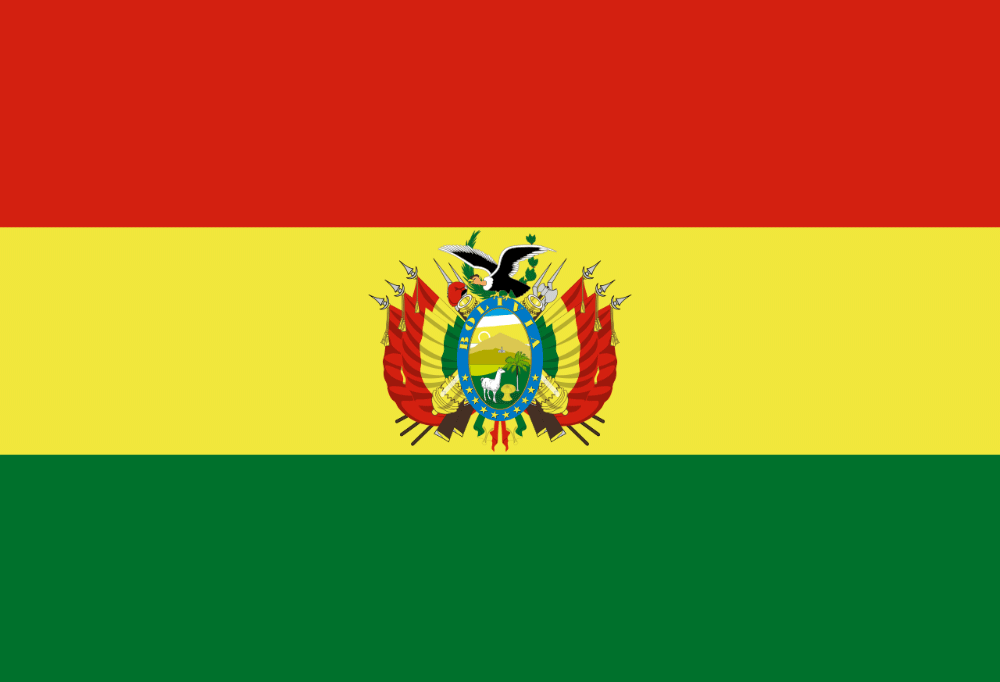
Bolivia🕣
Country in the central part of South America. Official name – the Republic of Bolivia. Population – 11.9 million people (as of 2020). Capital – Sucre (official), La Paz (de facto). Official languages – Spanish, Quechua, and Aymara. Government type – presidential republic. Main religion – Catholicism.
Bolivia
Greeting
In Bolivia, the usual way to greet someone in a business setting is with a handshake. Both men and women do this when meeting or saying goodbye.
When meeting a group, it's essential to greet each person individually. You should say hello or goodbye to each person at the table or in the room—just addressing the group as a whole isn't enough.
People in Bolivia often have their own little greeting routine: they start with a handshake, might hug or pat each other on the shoulder, and then shake hands again. That second handshake is seen as a sign of friendship.
Eye contact is important when greeting someone, although the duration people hold it can vary depending on the region.
First meetings are usually pretty formal, but later interactions tend to be warmer and more relaxed.
Women who know each other well often greet with a kiss on the cheek (without actually touching faces).
Common greetings in Bolivia are: “Buenos días” (Good morning), “Buenas tardes” (Good afternoon), and “Buenas noches” (Good evening).
Introduction
Bolivian surnames follow Spanish naming traditions. A person’s full last name usually has two parts: first comes the father’s paternal surname, then the mother’s paternal surname. For example: Armando Tejada Urquizo. In conversation, it’s enough to use just the first surname—so in this case, Señor Tejada.
Bolivians are often given two first names at birth, like Armando Carlos Tejada Urquizo. In everyday life, usually only one of the names is used. However, in official documents and formal writing, the full name should be used.
When a woman gets married, she may add her husband’s surname to her own, using de before it. For example, Maria Martinez Diaz marrying Arturo Beeche Santiago would become Maria Martinez Diaz de Beeche. In this case, she would be addressed as Señora Beeche.
In initial meetings, whether formal, official, or even social, you should use formal titles like Señor, Señora, or Señorita, followed by the person’s surname.
When starting a business relationship, Bolivians usually address foreign partners by their surname—not their first name—and expect the same in return. It's also polite to include the person’s job title, professional qualification, or academic degree if they have one.
Common professional titles include: Doctor/a (for doctors and lawyers), Ingeniero/a (engineer), and Profesor/a or Maestro/a (for professors or teachers).
If you don’t know someone’s professional title or they don’t have one, just use the polite forms: Señor (Mr.) for men, Señora (Ms.) or Señorita (Miss) for women, followed by their surname.
When it comes to using names and titles, follow your Bolivian colleagues’ lead. Stick to a formal tone at the beginning of a professional relationship, and wait for them to suggest moving to first names.
Exchange of Business Cards
In Bolivian business culture, it’s customary to exchange business cards during introductions or right after them at a first meeting. If you’re meeting with a group—say, a team of Bolivian businesspeople—you should give a card to each person. Make sure to bring plenty of cards with you when you take part in different events.
Besides the standard details, it’s a good idea to include any academic degrees, titles, or other professional qualifications you may have.
At least one side of your business card should be printed in Spanish.
There’s no specific ritual for handing over business cards in Bolivia, but when someone gives you theirs, take a moment to look at it.
Small Talk: Overview
Bolivians tend to have a warm and expressive communication style and are usually open to casual conversation. That said, it doesn’t mean they’ll be willing to talk about personal concerns—especially early on in a business relationship.
In general, Bolivians are fairly reserved during initial meetings. Even though humor is highly valued in many South American countries, it’s unlikely to break the ice right away here. Save your good jokes for later meetings.
When dealing with Bolivian colleagues, keep in mind that some formality is expected when speaking to people of higher social or professional status. This reserved behavior also extends to interactions with strangers, including potential new partners.
People in the western regions of Bolivia tend to place more importance on status, hierarchy, protocol, and the use of titles or degrees.
In contrast, communication in the eastern part of the country is typically more relaxed, open, and informal.
Avoid raising your voice during conversations—it’s considered rude.
Preferred Topics
Tourism and travel, especially in Bolivia
Family and anything related to home and family life
Local cuisine
The country’s climate and geography
Sports—especially football (soccer)
Taboo Topics
Controversial political topics, especially the anti-government protests of 2019 linked to the internal political crisis
Any discussions related to religion are considered taboo
The topic of Bolivia’s relationship with Chile is sensitive—especially regarding the War of the Pacific, which led to Bolivia losing territory and access to the sea
Social issues, including discrimination against Indigenous peoples and the situation of various ethnic groups
Anything related to sexual topics
Avoid making overly positive remarks about Bolivia’s neighboring countries—especially Chile—as they are often seen as rivals, particularly in areas like trade
Personal Space
It's good to know that the comfortable distance for conversation in Bolivian culture is shorter than in many others. People tend to stand quite close when talking—something common across many South American cultures.
If you stand farther away during a conversation (which might be normal in your culture), it could be seen as a sign of distance or lack of interest.
Interestingly, this comfortable distance can change depending on social status. For example, superiors and subordinates tend to stand a bit farther apart than colleagues of equal rank.
Body language and gestures play an important role in communication. Bolivians often gesture while speaking and may touch each other in friendly ways—like a pat on the shoulder or arm, a hug, or a light squeeze of the shoulder—as a sign of warmth and connection.
Nonverbal communication varies by region. In the south and southeast, especially in Santa Cruz, where many residents are descendants of Spanish settlers, body language is more expressive, and people usually maintain direct eye contact during conversations.
In the western parts of the country, where most of the population is Indigenous, body language tends to be more reserved. In these areas, eye contact may be limited or avoided altogether—especially if the speakers are from different social backgrounds.
Communication Specifics
Bolivia has a very diverse ethnic makeup. The population includes Indigenous peoples (the largest groups being Quechua and Aymara), mestizos (people of mixed Indigenous and European descent), and white Bolivians (mainly of European origin).
Indigenous communities have traditionally lived in rural agricultural areas, but that’s been changing due to growing migration to cities. Today, you can find people from nearly every ethnic background in Bolivia’s major urban centers.
Bolivia recognizes 37 official languages (including Spanish), though some of them are now considered extinct. Spanish is the main language of business and is spoken by the vast majority of the population.
People living in the western part of Bolivia tend to use an indirect communication style. This means they often choose more careful or less direct wording to avoid causing conflict or making someone “lose face.”
It’s common to avoid saying a direct “No.” Instead, people might say things like “I need to think about it” or “That might take some time.” Sometimes, especially in conversations between people of different social status, the response might even be silence.
Building trust and mutual understanding is a key feature of communication in Bolivia, and this process can take time. People from the eastern regions tend to be more open and informal, while those from the west may be more reserved—especially at the beginning of a relationship.
In general, Bolivians have a warm and friendly communication style. You’ll make a good impression on potential partners if you come across as sincere and genuinely interested in the conversation.
Any questions? Contact us.
Ask a Question