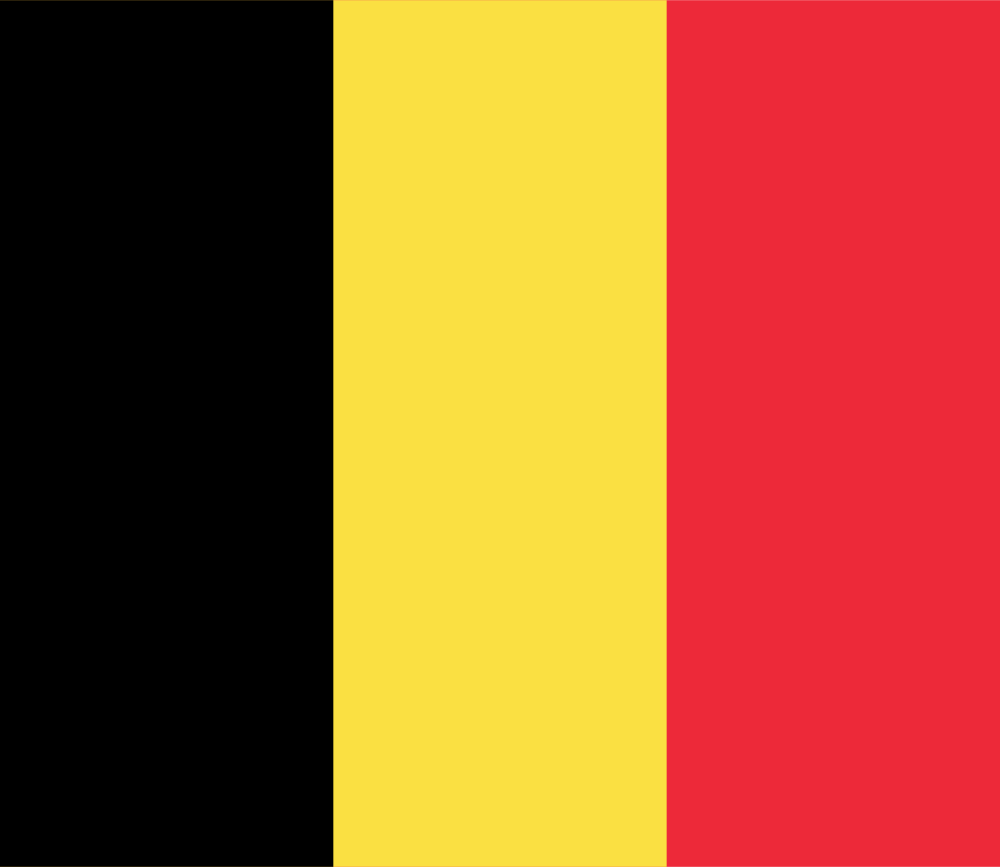
Belgium🕣
State in north-western Europe. Official name – Kingdom of Belgium. Population – 11.6 million (as of 2021). Capital – Brussels. Official languages – Dutch, French and German. Government type – federal parliamentary constitutional monarchy. Main religion – Christianity.
Belgium
Greeting
The handshake is an accepted form of greeting in Belgian business circles. It traditionally starts and ends every business meeting.
The handshake should be quite firm and during the first meeting can last as long as the parties are introducing themselves to each other. During the handshake, it is important to maintain eye contact with your partner.
If your meeting takes place in the office of your Belgian partner, remember to say goodbye to everyone involved, including the administrative staff, at the end of the meeting. In doing so, however, you should be guided by protocol or accepted norms of behaviour of the host party.
It is customary to shake hands with both men and women when greeting them as part of a formal communication or at the start of a business relationship.
Close friends or relatives exchange a light kiss on the cheek when they meet (3 times). However, this occurs when men say hello to women or between female friends. Men, even those in a friendly relationship, usually greet each other by shaking hands.
Your Belgian partner will appreciate it if you greet them in Dutch or French.
During the greeting, it is important to maintain a non-intrusive eye contact.
Introduction
In business situations, Belgians traditionally address each other by their surname. Names are used for close friends or relatives.
You will be able to call your partner by name after some time, when your relationship becomes more trusting, and only after your partner himself suggests it.
During the introduction, your Belgian colleague will first say his first name and then his surname. When you address this colleague, you should first use a polite title and then say his or her surname.
As polite forms of address (or polite titles) you can use the English forms Mr, Ms, Mrs, Miss if you are dealing with German or Dutch partners in Belgium.
Your partner may, however, be a Walloon (the Walloons are a Romance people in Belgium and live in the southern provinces of the country). In this case, it is better to use traditional French polite forms of address - Monsieur, Madame, Mademoiselle.
Ways of addressing colleagues and partners may depend on the corporate culture of different companies. Pay attention to the way your Belgian partners communicate.
Exchange of Business Cards
Exchanging business cards is a common procedure in Belgian business practice. It is a starting point for communication that can later develop into cooperation.
There is no special ritual for exchanging business cards in Belgium. You should always have an ample supply of business cards, especially if a number of meetings are planned.
Small Talk: Overview
Good manners and polite behavior are highly valued in Belgium. It is not customary to shout or speak loudly during public events. Belgians often impress foreigners as reserved and calm people, especially during the first meeting.
Belgians care about their private life and are not prepared to let people they barely know into it. However, as contacts develop, as they work on a project together, as they find solutions to a situation, there will be a sense of trust between partners. And your Belgian partner will be more open and friendly.
A humble demeanour is encouraged when dealing with Belgians. Do not try to impress your interlocutor by telling him or her about your successes. Avoid self-praise and self-promotion, and in general any exaggerations and superlatives. By emphasising your own importance, you risk losing your partner's trust.
Preferred Topics
Belgium has a rich cultural heritage and is well known for its art, architecture and music. If in a conversation with a Belgian colleague you mention the artists Rubens, Van Dyck, the singer Jacques Brel, or talk about a dance or music festival you have been to, it will certainly create a good atmosphere in the conversation.
Belgian sights and places you've visited or plan to visit in the country.
Sports and above all football and cycling.
Belgian food, cuisine, beer.
The culture of your country, the place you come from.
Family, family events or news. Make sure, however, that these questions are neutral and do not seem very personal.
Taboo Topics
Political, religious, linguistic or class differences that exist in Belgian society can be classified as topics that should be avoided.
The country's population consists of two main ethnic groups, the Flemish, who speak Dutch, and the Walloons, who speak French. A third, very small but nevertheless constitutionally recognised ethnic group is the Germans, who live on the border with Germany and the Netherlands.
In contacts with Belgian colleagues, it is important not to confuse the names of ethnic groups and not to mix their languages. And it is definitely not worth bringing up the subject, at least not until a sufficiently trusting relationship has been established between you.
Personal questions should be avoided, even if they seem quite neutral. For example, if the person you are talking to at some event is Belgian, you should not ask him or her where he or she works. Even such a question is quite personal for a Belgian.
Personal Space
In Belgian society, the comfort zone is an arm's length. If you shorten this distance, you are violating the other person's personal space - at least that is how it will be perceived in Belgium. Only in the Walloon Region of Belgium can this distance be shortened a little - it is slightly less than in other regions.
Physical contact during communication is not accepted in any of its forms, be it patting, hugging, etc. An exception is the handshake that people exchange during the greeting stage.
When communicating with a Belgian business partner, refrain from openly expressing emotions, especially negative ones. Even during lively discussions, emotional behaviour is likely to be perceived as unusual or even rude.
Only between friends and relatives is light physical contact acceptable, as well as open displays of emotions.
Communication Specifics
The coexistence of two large ethnic groups - the Flemings and the Walloons - affects many aspects of life, including the style of communication in this society.
In addition to these two ethnicities, representatives of other ethnic groups live in Belgium - Italians, Moroccans, French, Turks and the already mentioned Germans.
It is estimated that 25% of the Belgian population are either immigrants or born into foreign families. At the same time, Brussels, the capital of Belgium, is the centre of the European Union and as such attracts labour (specialists, managers, workers) from all over the continent.
All of these facts create a palette of incredibly diverse attitudes and styles of communication that exist simultaneously in this society. At the same time, the Belgians themselves feel quite confident in this diversity. You should, however, make an effort and figure out a little about what kind of partner you will be dealing with.
An important feature of communication in Belgian society is the desire to avoid conflicts wherever possible. Your Belgian partner will prefer to avoid difficult situations in a conversation and express his or her opinion by carefully choosing words and expressions and/or by using non-verbal means such as tone of voice or body language.
When developing business contacts, you should bear in mind that Belgians will not share any information on their own initiative, but will wait for a question to be answered while avoiding giving their opinion, especially if it is negative.
In fact, Belgians can be quite direct in their communication. This is the case, for example, when discussing a business proposal that is of interest to them. In such a situation, they will be quite open about their assessment, also in order to avoid misinterpretations of their position.
Any questions? Contact us.
Ask a Question