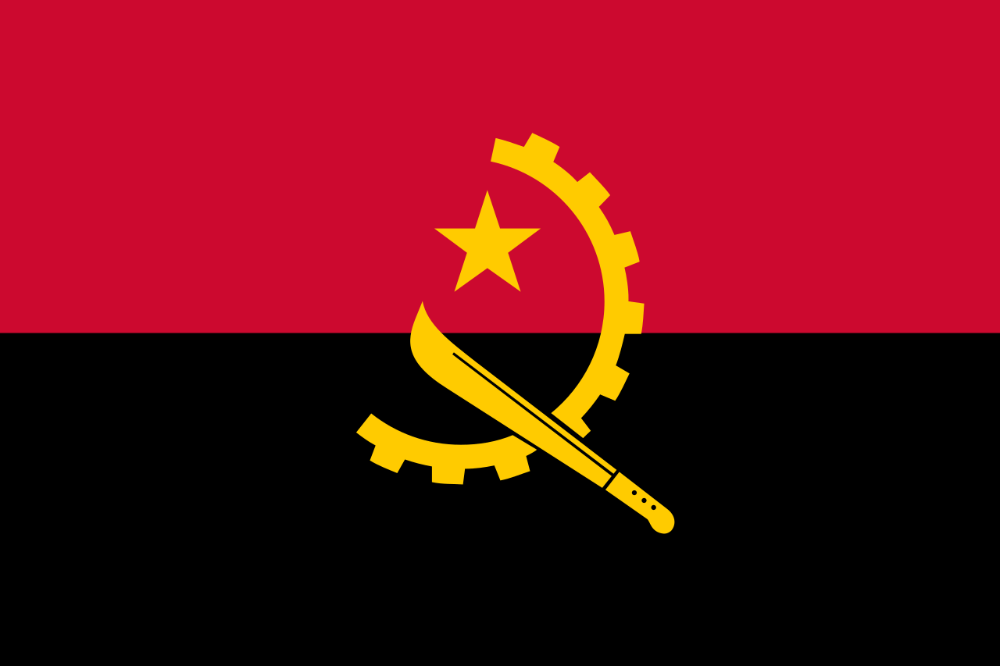
Angola🕣
Country in southwestern Africa. Official name – the Republic of Angola. Population – 34.8 million (as of 2020). Capital – Luanda. Official language – Portuguese. Government type – unitary dominant-party presidential republic. Main religion – Catholicism.
Angola
Greeting
Greeting is quite formal and polite. Traditionally it’s a handshake. Usually, everyone present exchanges handshakes during a meeting. The same applies when saying goodbye.
Handshakes are common among both men and women. However, this doesn’t always happen between genders. A man should wait for a woman to initiate the handshake before offering his hand.
It is customary to show respect to elders – both in terms of age and position. In addition to a handshake, a slight bow is also common. These individuals should be greeted first. Maintaining appropriate eye contact is also important.
Eye contact is considered a kind of status marker. Subordinates should not look at their superiors too frequently or for too long. The same applies to managers when interacting with those higher up in the hierarchy. Such behavior is viewed as disrespectful.
Women, especially older ones, typically avoid direct eye contact during introductions. Although in recent years, this has become less significant, especially in Luanda, the capital of Angola.
Among Africans, it is customary during a handshake to place the left hand on the wrist of the right hand of the person they are greeting as a sign of respect.
An important element of a greeting is a brief, polite conversation, during which the parties exchange general remarks and ask about each other’s health and family. This usually happens when a relationship has already been established. It is important to take time for this ritual and not rush through it. This tradition holds special significance if Angolans are your project partners. For them, it is a simple yet meaningful way to build genuine trust.
People who are on friendly terms greet each other with kisses, hugs, or back-patting. However, this is not appropriate in formal or even partnership-based but professional interactions.
Introduction
In official, formal, and business communication, use the partner's titles, degrees, or ranks if they have any. Examples of professional titles/ranks include Doctor, Ambassador, and Director.
Special respect should be shown when addressing individuals who are older or hold higher positions.
If you do not know your partner’s professional title or they do not have one, use polite forms of address such as Mr, Ms, Mrs, or Miss followed by the person’s last name.
When it comes to using names and titles, follow the lead of your Angolan colleagues. Maintain the appropriate level of formality according to the situation.
In Angolan business practice, it is not customary to address each other by first names in professional settings. This is reserved for family and close friends. Your Angolan colleague should take the initiative if a more informal approach is appropriate.
Exchange of Business Cards
It is customary to exchange business cards during introductions at the beginning of the first meeting, after the initial greeting.
During events, and especially during lunch or dinner at a restaurant, business cards are exchanged before parting ways.
The text on the business card should be in Portuguese—the official language of Angola—at least on one side of the card.
Professional titles and ranks, as well as educational background and academic degrees, are typically included on the business card. It is also common to include a mobile phone number.
There is no specific ritual for a business card exchange. Just be sure that the side facing the recipient has text in a language they can understand (in this case, Portuguese).
Business cards are handed out quite frequently, so it's important to have a sufficient supply when traveling.
Small Talk: Overview
Before starting a joint project, Angolans try to get to know their potential partner better, as relationship-building is at the core of any business. For small talk, choose positive or neutral topics.
If older people are there, be as polite as possible.
Try to avoid asking general yes-or-no questions, especially if your question could be interpreted as a request. It’s better to use so-called open-ended questions (e.g., “How do you plan to …?” or “What do you think about …?”), which allow the other person to choose their words more tactfully.
Angolans’ communication style depends on who they are speaking with. With friends and acquaintances, they tend to be lively and expressive. With people of higher status or those they don’t know well (even potential business partners), they are respectful and reserved.
Silence is an important element of conversation in Angolan culture. It means the speaker is carefully considering what was just said. Don’t show impatience if you feel the pause is taking too long.
In conversation, Angolans do not interrupt each other and wait until the speaker has finished. Interrupting is considered impolite—and in conversations with someone older or of higher status, it is a serious breach of etiquette. Your Angolan partner will expect the same behavior from you.
Preferred Topics
Sports, especially football (soccer).
Travel, especially within Angola.
Common interests, hobbies, pastimes.
The everyday life of Angolans outside of work.
Taboo Topics
Political topics, especially the politics of the Angolan government.
Avoid critical comments concerning Angolan society, such as corruption or other negative aspects of the country's life.
The civil war in Angola (1975–2002), which ended relatively recently, is a sensitive topic.
Do not make any racist remarks, even if veiled or indirect.
Personal Space
Comfortable communication distance for Angolans is shorter than in other cultures.
During a conversation, they tend to stand quite close to each other, especially in groups. You should not take a step back to increase the distance from your conversation partner, as this may be perceived as unfriendly behavior.
Angolans use gestures and body language quite a lot. Physical contact is not considered unusual, although it is not as expressive as in Latin American cultures.
Communication Specifics
Overall, the communication style in Angola can be described as polite and rather formal. The protocol is usually observed.
While communicating, Angolans generally care about the mood of their conversation partner, and for this reason, they may avoid expressing their opinions or judgments directly, so as not to hurt the other person's feelings. Instead, they might say what they believe is expected of them or what the other person wants to hear.
This is partly due to Angola’s long-standing traditions of working closely with family or tribal members. To maintain harmonious relationships, it is important to be tactful, avoid harsh judgments, and generally refrain from expressing one’s thoughts too bluntly.
This also applies to the word "No," which many people try to avoid, as it can disrupt harmony. If someone does need to express a negative response, it is usually phrased in a rather indirect way.
These subtle meanings are well understood within Angolan society. However, foreigners may need time to grasp them and learn how to respond appropriately.
Any questions? Contact us.
Ask a Question