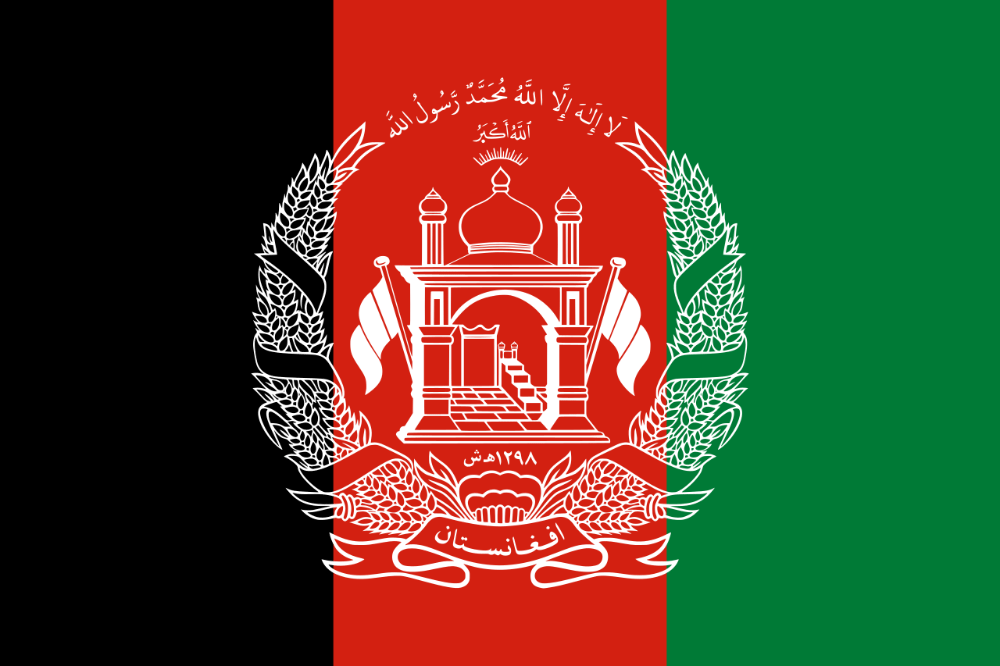
Afghanistan🕣
State in the southwest of Central Asia. Official name – the Islamic Republic of Afghanistan. Population – 40.5 million (as of 2020). Capital – Kabul. Official languages – Dari and Pashto. Government type - unitary state with republican form of government (until the events of 2021). Main religion – Islam.
Afghanistan
Greeting
The accepted form of greeting is the handshake. The ritual of greeting in general is an important part of the meeting and is traditionally given a lot of time in this culture.
When starting a business meeting with an Afghan colleague, do not rush to jump right into discussing business matters. On the contrary, invest time in the greeting procedure. This will help to strengthen your relationship.
The traditional Afghan greeting in formal situations is a gesture with the right hand, which the speaker places on the chest in the heart area. At the same time, the speaker tilts his head slightly, as if bowing to the other person. With this gesture the speaker expresses his sincere feelings and respect towards the interlocutor.
Foreign women should wait for a man to take the initiative before extending a hand to greet them. The same applies to foreign men, who should pay attention to the woman's behavior in this situation.
Body contact as well as eye contact between the sexes is not accepted due to the Muslim traditions that are strong in this state. As part of formal communication, a man may greet a woman with a traditional gesture with his right hand in the heart area.
Men who are friends may hug or pat each other on the arm, shoulder, back. With foreign colleagues quite formal and polite relations are maintained for a very long time.
A handshake is necessarily accompanied by a verbal greeting, which is also accepted in the Arab world: As-salamu alaikum, which means Peace be upon you. In response, one should say Wa'alaikum al-salam, which means Peace be upon you, too.
When greeting an Afghan colleague for the first time, show the utmost respect and deference.
Introduction
Most Afghans do not have surnames, limiting themselves to first names only. However, if necessary, they can choose a surname, which is usually done by the middle class, city dwellers, and those with higher education.
In choosing a surname, Afghans are guided by their father's name, their kinship with a particular clan, family, tribe, or even an adjective that characterizes a person. As a result, members of the same family may have different surnames within the same family. An example is the brothers Dr Abdul Zahir (former head of Parliament) and Dr Abdul Kayeum (former second deputy prime minister of the country).
Male names in Afghanistan consist of two parts, one of which is considered auxiliary or supplementary. Such auxiliary names are Mohammad, Abdul, Gholam, Ali, Khan, Shah and some others. The full names look like this: Mohamad Nabi, Abdul Ghafoor. In this example, Nabi and Ghafoor are considered proper names.
The structure of female names is different from male names, they do not have a two-component structure, for example: Shirin, Nazria, Ayesha.
In the business practice of Afghanistan, polite forms of address in English are accepted, especially if this language is a means of communication between partners. These forms include Mr, Ms, Mrs, Miss, which should be used with a person's first name or first and last name. For example, your partner whose name is Abdul Waleed Sanjari should be addressed as Mr Waleed or Mr Waleed Sanjari, but not Mr Sanjari as is the Western tradition.
Colleagues and peers call each other by their first names. Foreign partners should not proactively switch to addressing each other by name. Wait for your Pakistani colleague to suggest that you do so.
Afghan women retain their maiden name after marriage, as Islamic law does not require mandatory name changes after marriage.
Exchange of Business Cards
Business cards should contain all necessary standard information, including full name, title, company name, and current contact details.
If you have academic degrees or titles, such as master's or PhD, mention them on your business card. Your status will certainly be enhanced, as education is highly valued in Afghanistan.
In Afghan business practice, business cards are not always exchanged during introductions, but if you receive one, do not treat it carelessly, for example, do not put it aside, write on it, or bend it. On the contrary, it is important to read its contents, thus showing respect to the interlocutor.
There is no special ritual when handing over a business card in Afghanistan. However, it should be remembered that business cards, as well as any other papers or documents, should be passed with the right hand, not the left.
Small Talk: Overview
Small talk is of great importance in Afghan business practice and is a kind of prelude to the actual negotiations. First, it is important to talk about general topics, for example, asking where you are staying (if you are a guest) or how you got there, whether you are satisfied with everything, etc. Only then can you move on to discussing business matters.
It is important for Afghan businessmen to get to know their potential partners better, as establishing a relationship is at the heart of any business. Small talk builds a sense of trust between partners, which is very important in many Asian cultures.
Never be rushed during small talk. Trying to quickly move on to discussing business issues, your project may end before it begins. Show sincere interest in your partner, his interests, and preferences, for example, in sports or travel. Behave naturally, friendly, and interested.
While communicating, especially with older people, it is important to behave politely and respectfully.
At the initial stage of developing business relationships, Afghans tend to be formal and reserved, believing that displays of emotion, including loud speech and expressive behavior, look immature and show a lack of experience.
As in other countries, younger people are less formal and have a rather relaxed and casual style of communication.
Preferred Topics
Family issues are traditionally an important topic of conversation in Afghan society. Take a personal interest in your partner, ask about his health and the family. Avoid mentioning female family members.
At the same time, share information about yourself. It will be important for your partner to know about your background, education, experience, qualifications, etc.
Travelling, including cities and countries you have visited.
Taboo Topics
Family is generally a popular topic in Afghanistan, but questions and conversations about the female part of the family - wives, mothers, sisters, and especially daughters - should be avoided.
A very sensitive topic is the political situation in the country. Afghans talk a lot about it, taking different positions. A foreigner should refrain from making any judgments.
Religion and everything that relates to Islam is a rather sensitive topic, which it is better not to touch in conversation. Do not say anything that even remotely sounds like criticism.
Afghans react strongly when the topic of refugees comes up during a conversation. Many people in this country have fled the country, having lost their families, relatives, friends, and acquaintances. If this topic does come up in conversation, expressing sympathy would be enough.
It is better to avoid controversial political issues altogether, especially the policies of the Taliban.
Avoid discussing local issues, even if you are familiar with them.
Personal Space
In this culture, the distance of comfortable communication is shorter than, for example, in Central and Northern European countries or the USA. they feel comfortable communicating at a distance of less than half a meter from the interlocutor.
Do not regard this as offensive or even aggressive behavior. Try not to increase this distance, for example, by taking a step back, as this will be perceived negatively.
If Afghan men stand quite close to each other during a conversation, the distance between the speakers increases seriously when a woman appears.
Afghans can be characterized as active and emotional interlocutors. In communication, they gesticulate quite actively and often use body language.
Physical touches are generally accepted. They include patting on the shoulder, arm, back, and long handshakes. This naturally applies only to men, who should not touch women under any circumstances.
When communicating with representatives of the opposite sex, Afghans lower their gaze downwards. Younger interlocutors behave in the same way when communicating with elders in age or position/status. This is considered a sign of respectful behavior.
Maintain non-intensive eye contact with your Afghan counterpart. A direct stare will be seen as rude behavior.
Communication Specifics
Afghanistan is a multinational and multi-ethnic state, inhabited by more than 20 nationalities, the largest of which are Pashtuns (sometimes called Afghans). Your partners in Afghanistan may include Pashtuns, Tajiks, Hazaras, Uzbeks, or other national and ethnic groups. Do not refer to everyone as Afghans, as this may be painfully perceived by those who do not identify themselves as Afghans. (Although the country's constitution declares the entire population as the "Afghan nation").
Another common mistake is to think that Afghanistan belongs to the Arab world. Arabs are not represented among the national groups living on the territory of the country, and other ethnic groups have no kinship or tribal ties with them.
Afghans are known for their hospitality. They always make guests feel welcome by offering them the best of home, including food, drinks, and even crockery. Your Afghan partner may invite you to visit home quite early in your business relationship.
If you are sitting at a low table or on the floor during an event, pay attention to the posture you adopt when doing so. Your partner should not see the soles of your shoes; this is considered a very rude gesture, even an offence, as feet are considered a dirty part of the body.
Any questions? Contact us.
Ask a Question